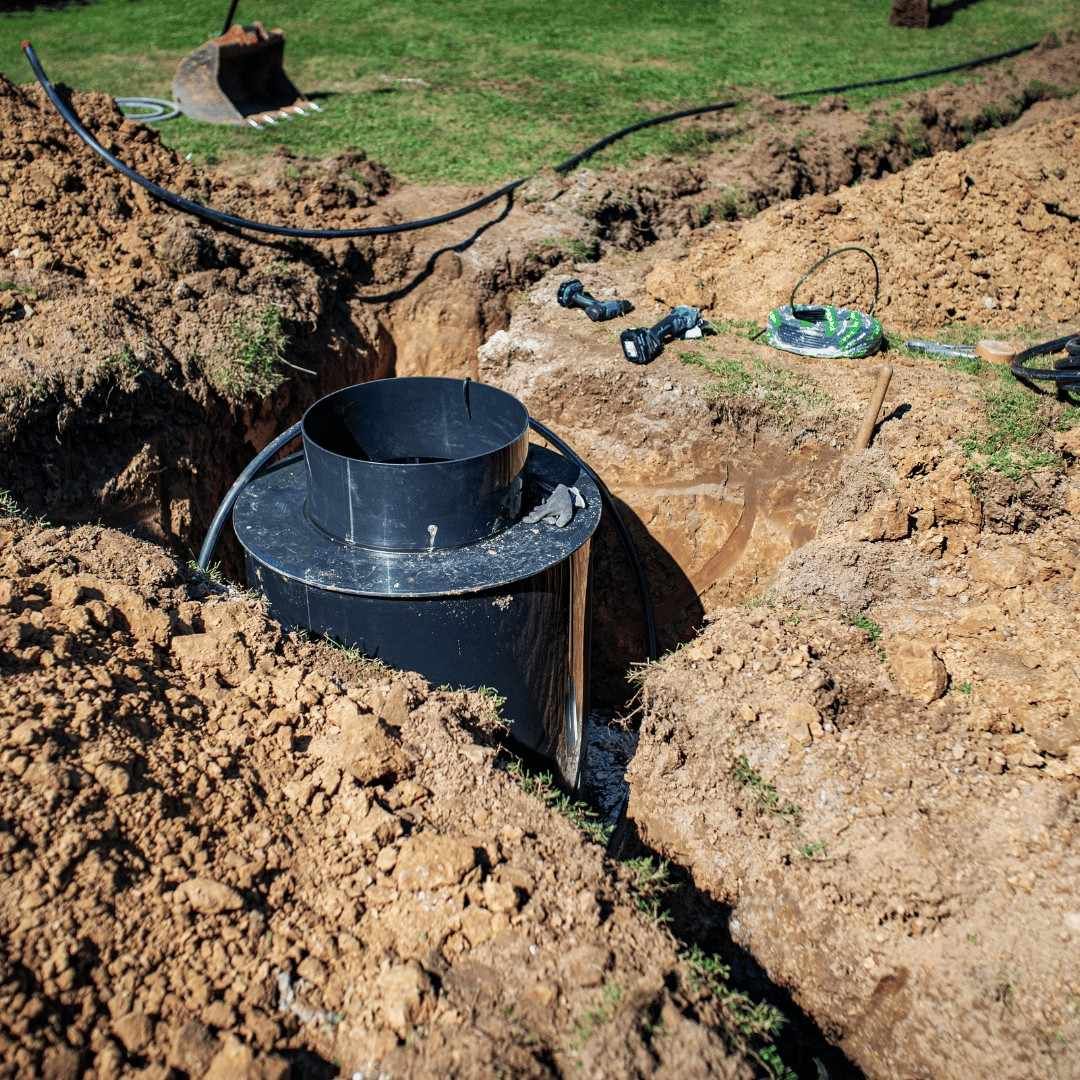
Why this mistake is so damaging: The excavated soil, particularly Connecticut's clay-heavy shoreline soil, has the same low permeability problem that likely contributed to the original drainage issue. Backfilling with this soil directly on top of the gravel and fabric system creates a dense, slow-draining cap that reduces the rate at which surface water can reach the drainage system below it. In clay soil, surface water sits on top of this backfill rather than percolating down into the French drain, which means the system never receives the water it was designed to manage.
The correct approach uses clean gravel as backfill above the fabric-wrapped drainage layer up to a point near the surface, with the final few inches restored with topsoil and seed or sod to blend with the surrounding landscape. This maintains permeability through the full depth of the installation rather than capping a functional drainage system with the same low-permeability soil that was part of the original problem.
Water that repeatedly gathers beside a foundation shows that the property is sending water to the wrong place, holding it there, or lacking a workable outlet. The cause may be settled grade, flat terrain, concentrated roof runoff, uphill flow, compacted soil, or deeper groundwater pressure.
That distinction matters. Adding soil beside the house may help one property and make another worse. A drain may collect a puddle without correcting the slope that keeps feeding it. Foundation waterproofing may be appropriate when water is pressing against the wall below grade, but it should not substitute for correcting avoidable surface runoff.
For homeowners researching yard regrading Madison CT, the useful question is not simply, “How do we remove this puddle?” It is, “Why does water keep arriving here, and where can it safely go instead?”
Why Heavy Rain Exposes a Foundation-Edge Drainage Problem
During a light shower, soil and vegetation may hide a drainage defect. Heavy rain changes that balance. Roof runoff arrives in concentrated bursts, and low areas fill faster than they drain. A weak slope becomes visible as water moves toward the building.
The transition from September into October is a useful time to watch this behavior. Seasonal rain can reveal the exact routes water follows before leaves and winter conditions make the site harder to evaluate. Homeowners do not need to stand outside during severe weather. A safe walk after the rain often shows flow lines, sediment, flattened grass, mulch displacement, and damp foundation areas.
Madison presents more than one drainage pattern. Flat shoreline lots may have very little natural fall, while properties farther inland can receive runoff from wooded or elevated ground. Established neighborhoods may also have decades of soil settlement and landscape changes around older foundations. The same visible puddle can therefore come from very different site conditions.
Water keeps returning because the source, route, low point, and outlet have not been treated as one system. Pumping out a low area or filling it once may remove today’s water without changing what the next storm will do.
How Negative Grading Develops Around Madison Homes
Positive grade slopes away from the foundation. Negative grading does the opposite: the surface falls toward the wall or creates a depression that holds water beside it. The condition can be obvious, but it often develops gradually enough that homeowners do not notice it until water begins pooling after heavier storms.
Common causes include:
- Backfill settling beside the foundation after construction or earlier excavation
- Repeated foot traffic compacting soil along a walkway or side yard
- Raised planting beds holding water against the house
- Patios, steps, or driveways redirecting sheet flow toward the wall
- Erosion removing soil from one section of the perimeter
- New landscaping blocking an older surface drainage route
- Downspouts discharging into a low area beside the building
The U.S. Department of Energy’s Building America Solution Center recommends sloping permeable surfaces away from a home where space permits and using swales or drains when setbacks or barriers prevent the needed fall. Review the federal guidance on grading away from foundations. The published target is useful as a planning reference, but an existing Madison property still needs a site-specific design that accounts for door thresholds, siding clearance, hardscape, neighboring lots, and the available discharge point.
Simply adding a mound of topsoil against the wall is not professional regrading. The new surface has to remain below vulnerable building materials, compact enough to resist settlement, and shaped to continue moving water after it leaves the immediate foundation area.
Water Pooling Near the Foundation Is a Symptom, Not a Diagnosis
Visible water tells you where the drainage system is failing, but not necessarily why. A puddle may be fed by surface runoff, a downspout, subsurface flow, a high seasonal water table, or several sources at once. That is why water pooling near foundation walls should trigger diagnosis before installation.
The pattern after rain offers useful clues:
- Water that appears quickly beneath a downspout points toward concentrated roof runoff.
- A broad sheet moving across the lawn suggests a grading or swale problem.
- Water emerging from an uphill edge may indicate subsurface flow or a spring condition.
- A narrow low spot beside the wall may reflect settled backfill.
- Soil that stays saturated long after the surface dries can indicate deeper groundwater.
- Moisture that continues during dry weather is less likely to be explained by surface grading alone.
EPA moisture-control guidance emphasizes preparing a site to drain water away from a building and controlling subsurface water at the foundation. Read the EPA’s moisture-control guidance for buildings. This supports a whole-site approach: grade, roof runoff, foundation drainage, wall protection, and the final outlet all influence whether the foundation perimeter can dry.
Inside the home, recurring musty odors, efflorescence, damp lower walls, peeling finishes, or water at the wall-floor joint can indicate that exterior water is reaching the foundation assembly. Those signs do not identify the source by themselves, but they raise the importance of a full exterior assessment.
Follow the Water Before Choosing a Repair
A useful drainage assessment starts above and uphill from the puddle, then follows the water to the foundation and beyond it. Drainage Pro of CT works exclusively on exterior drainage, so we evaluate how the entire property contributes to the condition rather than assuming the most visible wet spot is the source.
The assessment should include roof area and downspout discharge, grade along each foundation wall, low areas, hardscape slope, neighboring terrain, soil behavior, erosion patterns, existing drains, and available outlets. Observations during or just after rain are especially valuable because they show active movement rather than relying only on stains left behind.

| What you observe | Likely issue to investigate | Possible direction |
|---|---|---|
| Surface water visibly runs toward the house | Negative grading or altered flow path | Regrading, swale, or surface collection |
| Pool forms directly below a downspout | Roof runoff discharged too close | Underground downspout drainage |
| One low area collects water away from the wall | Local depression with no outlet | Catch basin, grading, or both |
| Water arrives from higher ground | Uphill surface or subsurface flow | Swale, curtain drain, or regrading |
| Foundation stays damp after yard dries | Deeper saturation or wall exposure | Foundation drainage and waterproofing review |
| Existing drain backs up or overflows | Blockage, poor outlet, or inadequate capacity | Inspection, cleaning, repair, or redesign |
This table is a starting framework, not a remote diagnosis. Two homes with the same symptom can need different systems because their soil, elevations, roof layout, and discharge options differ.
Homeowners can document the pattern from fixed points after several rain events. Note where water begins, how long it remains, and whether indoor moisture appears at the same time.
When Yard Regrading Is the Direct Solution
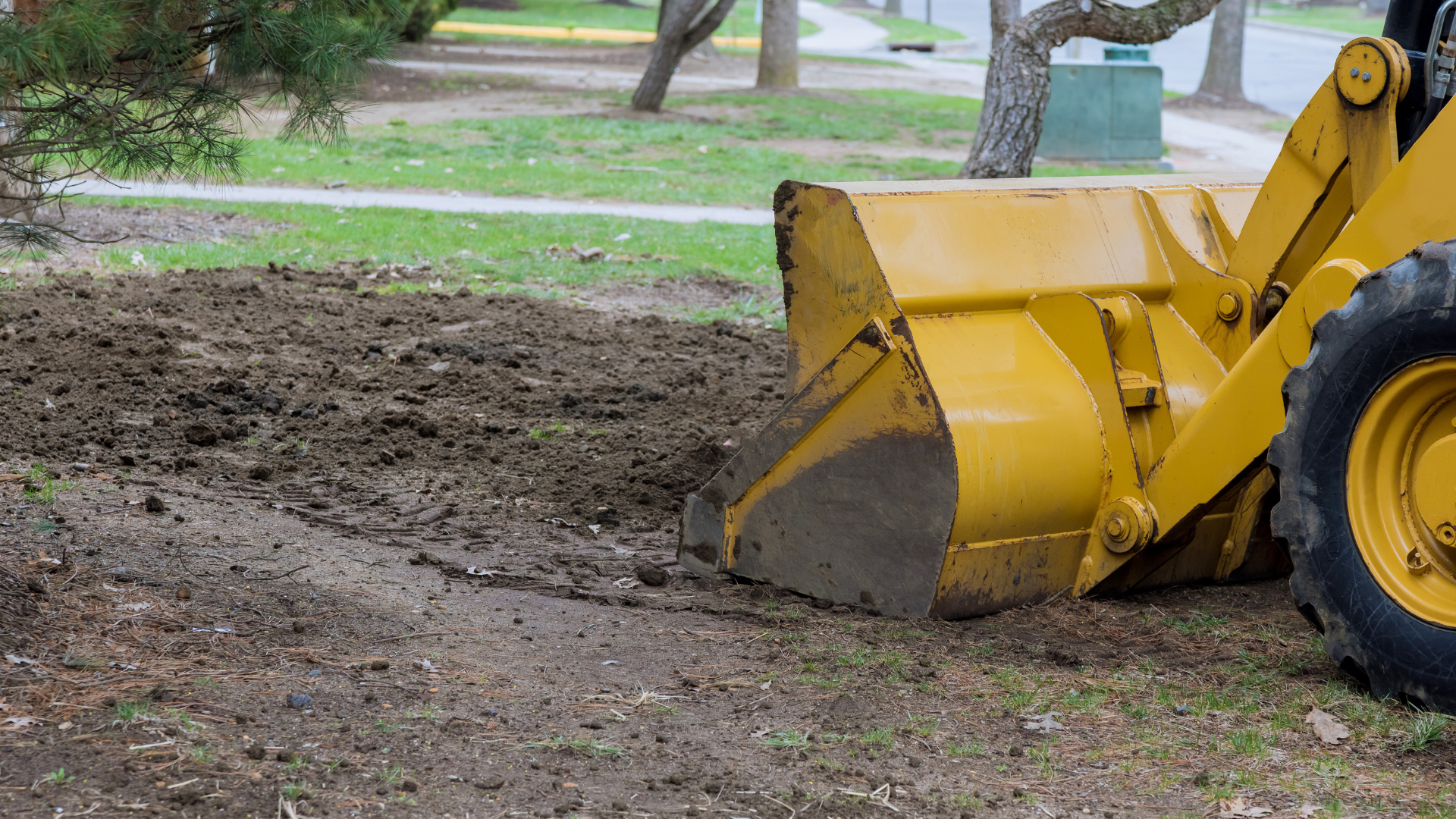
Regrading is appropriate when the primary failure is at the surface. If the yard slopes inward, settled soil creates a trough beside the wall, or landscape work redirects runoff toward the home, changing the surface elevation can restore a positive drainage path.
Professional yard regrading in Madison, CT is not limited to the first few feet beside the house. The corrected slope must continue toward a workable destination. On a property with natural fall, that may be a broad lawn area or a carefully shaped swale. On a flatter lot, the grade may need to feed a catch basin, underground pipe, or dry well so water does not simply collect ten feet farther away.
Regrading is most likely to be effective when:
- Water moves across the surface toward the foundation.
- The basement becomes damp mainly during heavy surface runoff.
- Soil beside the home has visibly settled.
- A planting bed, patio edge, or walkway interrupts positive slope.
- The foundation wall dries after the surface water disappears.
- There is enough elevation change or a designed outlet to receive redirected water.
Drainage Pro’s Madison yard grading and regrading service treats the project as a drainage design problem. We determine the outlet before moving soil, protect required clearances around the home, and restore disturbed areas after the corrected grade is established.
When Grading Needs Help From Foundation Drainage
Some properties cannot solve the condition through shaping alone. A flat Madison lot may lack enough fall to carry water to daylight. A hillside property may receive more runoff than a surface slope should handle. In those cases, regrading can improve direction while another component collects or discharges the water.
The combined plan may include:
- A swale that guides surface flow around the home
- A catch basin at a defined low point
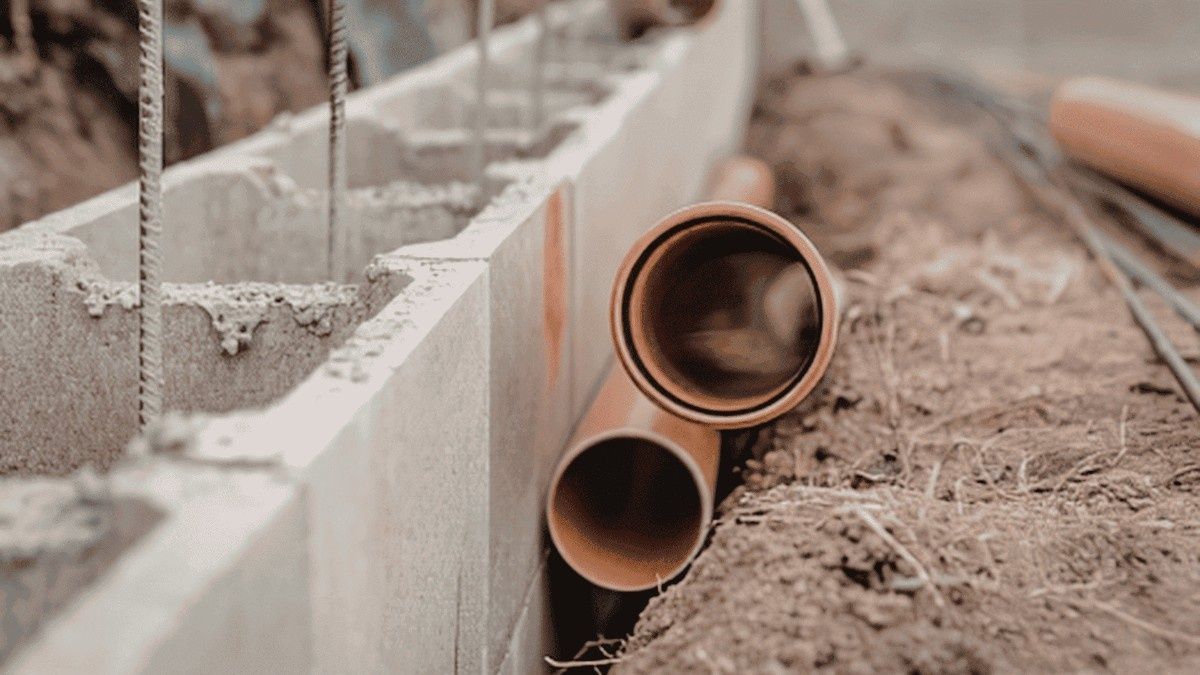
- Solid underground pipe that carries collected water to a safe outlet
- A dry well where soil and site conditions support infiltration
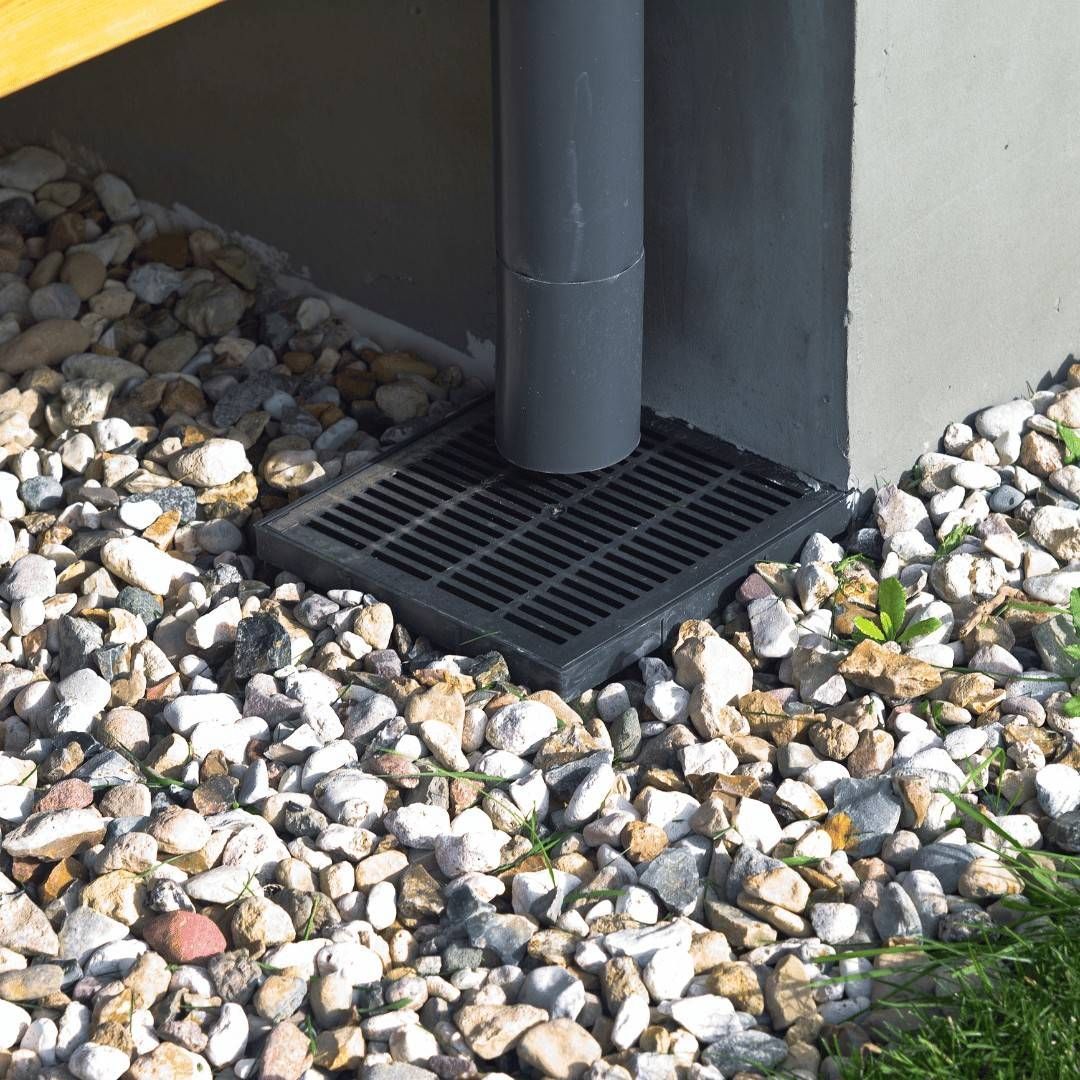
- Underground downspout lines that keep roof water out of the graded area
- A curtain drain that intercepts water moving from higher ground
- A footing drain when water pressure exists at foundation depth
The discharge plan is especially important near wetlands, watercourses, neighboring properties, and public drainage systems. Connecticut DEEP explains that clearing, grading, filling, excavation, and related work in or near inland wetlands or watercourses may require municipal review and approval. Review Connecticut’s municipal wetlands permitting guidance. A contractor should identify possible review needs before excavation, not after the system is installed.
The same diagnostic method applies in nearby Guilford, Clinton, and Branford, but terrain and outlet constraints change from property to property. A wooded Guilford slope, a low coastal Clinton lot, and a dense Branford neighborhood may each require a different route even when water is pooling beside the foundation.
When Foundation Waterproofing Belongs in the Plan
Regrading reduces avoidable surface saturation. It does not replace exterior waterproofing when groundwater remains against the below-grade wall or water is moving through cracks, masonry, penetrations, or the wall-floor joint. Foundation waterproofing Madison CT homeowners need is intended for that deeper and more persistent exposure.
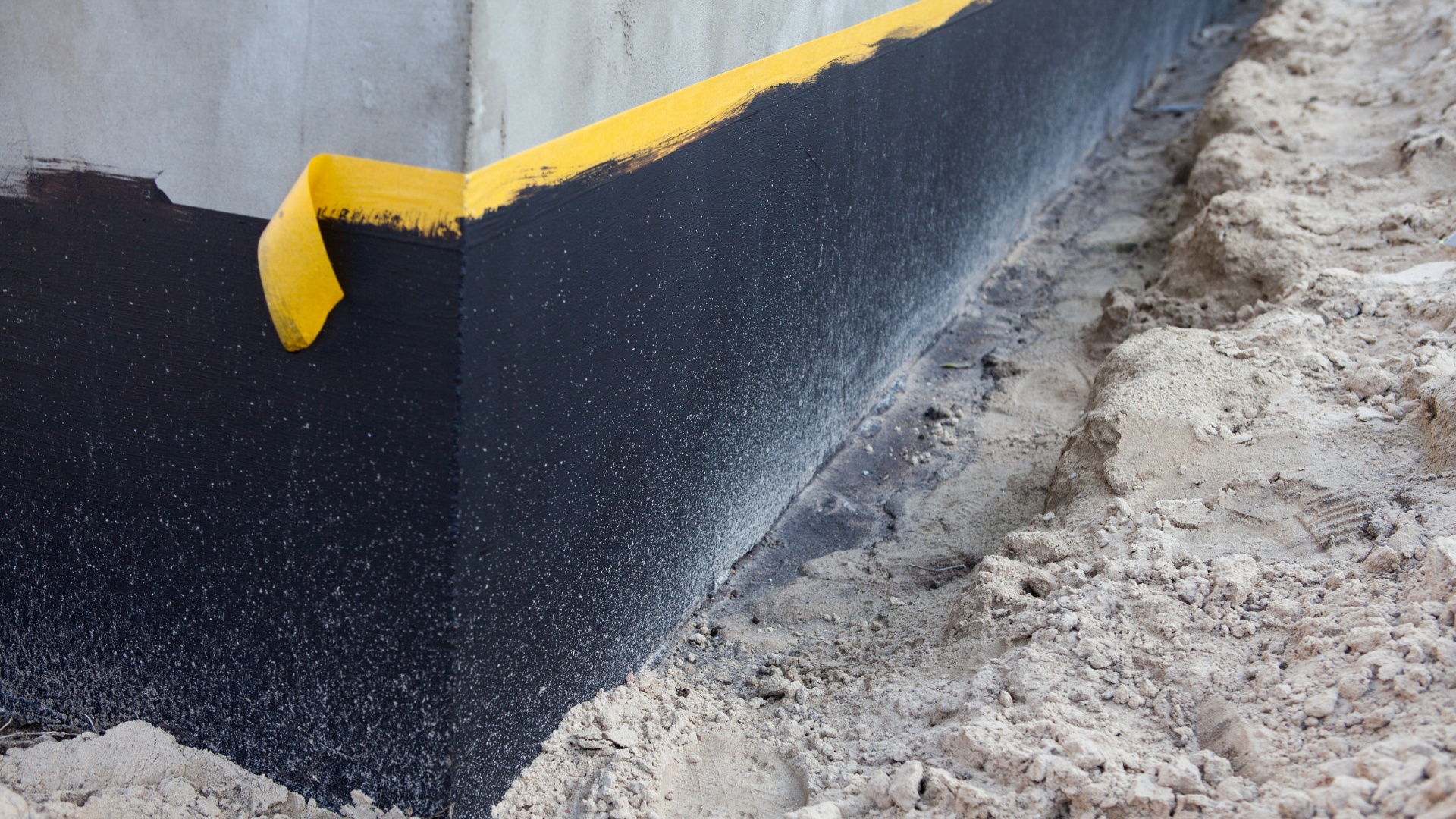
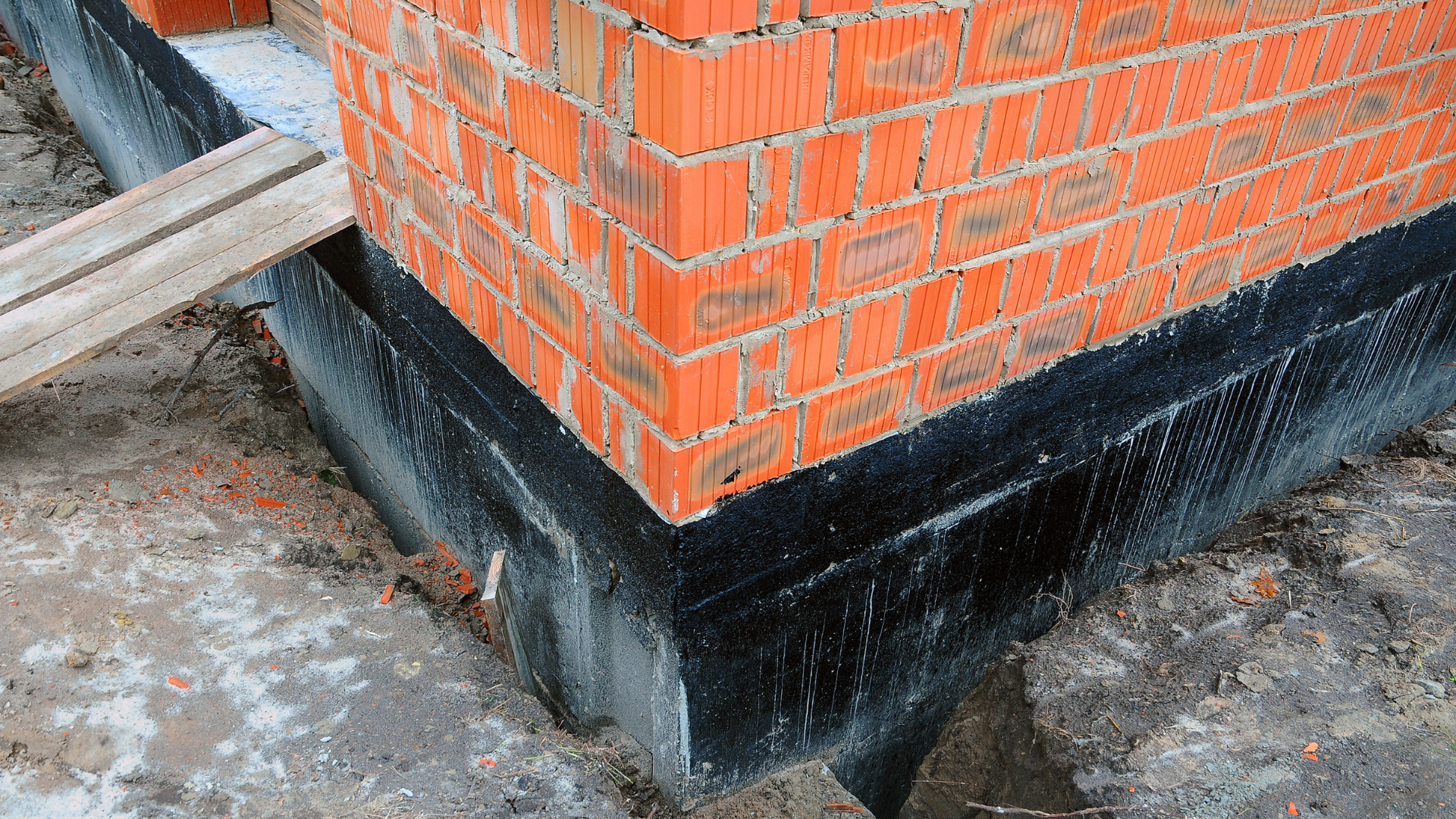
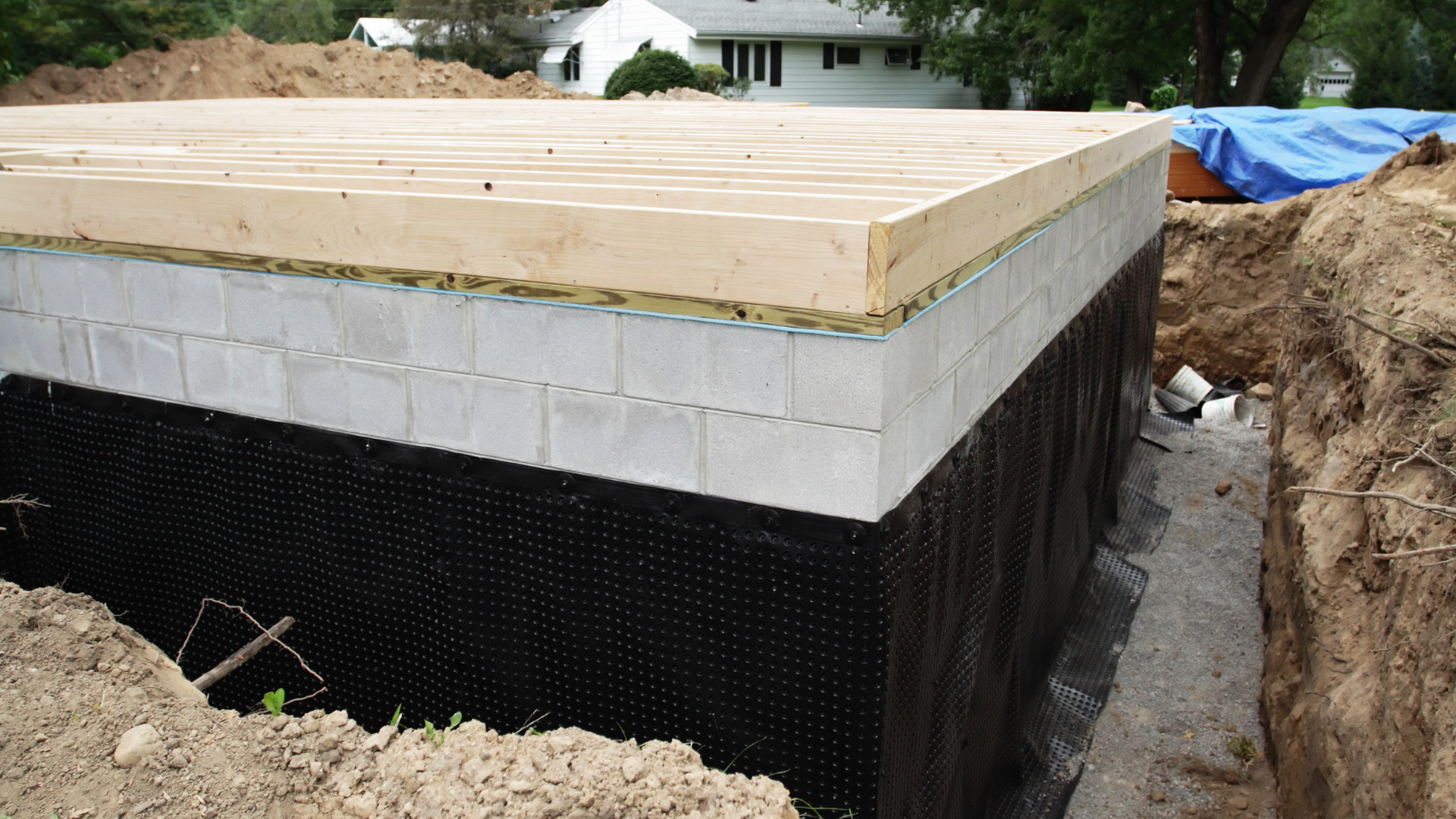
Drainage Pro’s exterior process can include excavation to the footing, wall preparation, a continuous waterproofing membrane, drainage board, footing drainage, backfill, and restoration. The exact scope depends on the wall and site. We work from the outside, where water first reaches the building, rather than treating the interior symptom alone.
Conditions that make waterproofing more relevant include:
- The foundation stays damp after surface water and roof runoff have been corrected.
- Efflorescence or staining returns through repeated wet periods.
- Water enters through the wall or at the wall-floor joint.
- Seasonal groundwater keeps the perimeter soil saturated.
- Existing footing drainage is absent, damaged, or unable to discharge.
- The property needs both wall protection and a reliable foundation drainage route.
The goal is not to choose the biggest project. It is to correct the shallowest proven source first and confirm whether deeper pressure remains. Some homes need only regrading. Others need grading plus drainage. A smaller group needs a complete exterior waterproofing assembly because the foundation itself remains exposed after surface conditions are controlled.
What Regrading and Waterproofing May Cost
Estimated 2026 Market Context
Drainage Pro of CT publishes current planning ranges for Madison residential work. These are our general ranges, not fixed prices for every property. We provide a free on-site assessment and exact written pricing after tracing the water source, measuring the work area, and identifying the discharge plan.
| Drainage Pro service | Published Madison planning range | What commonly changes the scope |
|---|---|---|
| Yard grading or regrading | $2,000–$5,500 | Area, material, equipment access, restoration, outlet |
| Exterior foundation waterproofing | $4,000–$8,500 | Wall length, excavation depth, soil, footing drain, restoration |
| Underground downspout drainage | $1,000–$2,500 | Number of leaders, pipe length, trench access, final outlet |
| Free on-site assessment | $0 | Includes diagnosis and written recommendation |
| Dry well, catch basin, or combined system | Site-specific | Capacity, soil absorption, excavation, and permitting |
Madison’s more accessible sandy coastal soils can keep some excavation work toward the lower part of a range. Heavier inland soils, stone, mature landscaping, restricted access, deeper foundations, long pipe runs, and combined drainage components can move a project higher.
Qualifying Drainage Pro installations include our
5-year workmanship warranty. HIC#0706616 and insurance information are available through the company. The written proposal should make clear what will be graded, which components are included, where water will discharge, and how disturbed areas will be restored.
Stop Repeated Pooling by Correcting the Whole Water Path
Water returns to a Madison foundation because the property continues sending it there or has no safe way to move it onward. The durable answer comes from identifying the source, correcting negative grading, separating roof runoff, collecting water where necessary, and giving every component a reliable outlet.
Drainage Pro of CT provides free exterior drainage assessments for Madison homeowners. We walk the property, trace surface and roof water, review foundation symptoms, and recommend the least extensive system that can reasonably solve the cause. That may be regrading, yard drainage Madison CT service, underground downspout drainage, foundation waterproofing, or a coordinated combination.
Call (860) 852-6270 or request a free estimate to have the property evaluated before the next sequence of heavy rain repeats the same problem.
Related Services & Pages
Yard Grading and Regrading in Madison
Foundation Waterproofing in Madison