Why this mistake is so damaging: The excavated soil, particularly Connecticut's clay-heavy shoreline soil, has the same low permeability problem that likely contributed to the original drainage issue. Backfilling with this soil directly on top of the gravel and fabric system creates a dense, slow-draining cap that reduces the rate at which surface water can reach the drainage system below it. In clay soil, surface water sits on top of this backfill rather than percolating down into the French drain, which means the system never receives the water it was designed to manage.
The correct approach uses clean gravel as backfill above the fabric-wrapped drainage layer up to a point near the surface, with the final few inches restored with topsoil and seed or sod to blend with the surrounding landscape. This maintains permeability through the full depth of the installation rather than capping a functional drainage system with the same low-permeability soil that was part of the original problem.
A Halloween display can change how water moves through your yard without requiring any digging. A large prop can cover an inlet, a hay bale can interrupt a shallow drainage route, and a tarp can collect rain in a new low spot. These are setup problems rather than evidence that every wet lawn needs a new drainage system. Often, moving the decoration is the most useful first step.
For Clinton homeowners, the goal is to keep the display outside the routes water already uses. Yard drainage problems that begin after decorating deserve a check of placement before assuming a buried pipe has failed. These five mistakes explain what to look for and how to distinguish accessible cleanup from work that needs professional evaluation. A thoughtful layout can protect both your decorations and the areas visitors use after dark.
Placing Large Props Over Drain Grates
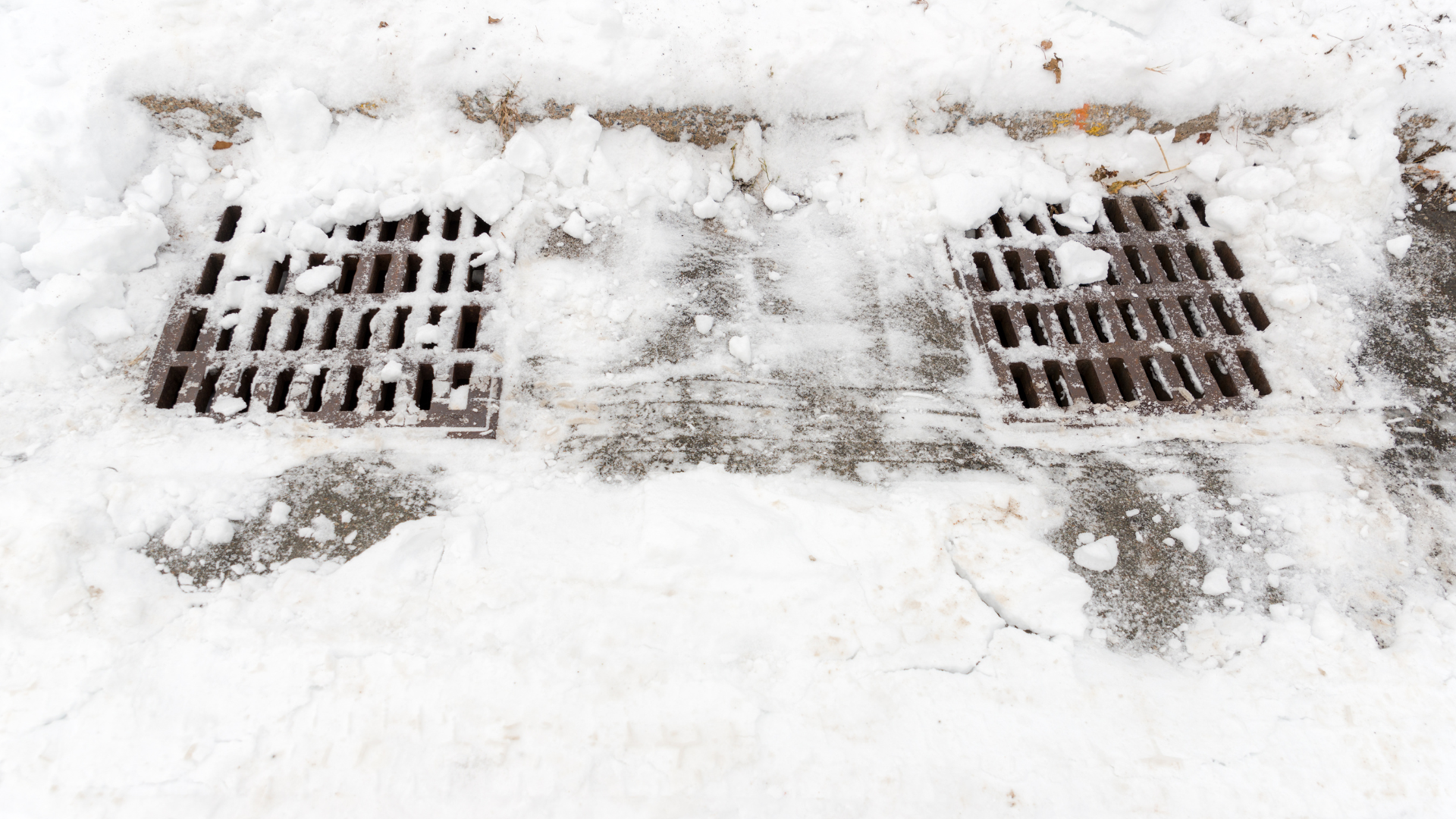
A plastic tombstone or inflatable base can cover a drain without looking like an obstruction from the sidewalk. Weighted feet and decorative fabric may also restrict the openings around the edge. Water that once entered the grate can then collect beside it or flow somewhere else. The drain beneath the display may still be intact even though the surface collection point has stopped working properly.
Before setting up, locate yard-drain grates, catch basins, and accessible inspection points. Keep the complete inlet exposed and leave room to inspect and maintain it. There is no universal clearance measurement for every drain or decoration. The layout should preserve both the opening and the route water follows to reach it.
Check more than the visible center of the grate
- Move bases, fabric, and weights away from all inlet openings.
- Keep cords and straps from catching leaves across the grate.
- Leave the approach low point clear of props and storage.
- Make sure the decoration will not shift over the drain in wind.
- Keep lids and maintenance access available after the display is complete.
Portland's catch-basin maintenance guidance identifies ponding and slow drainage around a grate as signs that maintenance may be needed. When a problem appears after setup, remove the obstruction and see whether drainage improves during the next safe opportunity to observe it. Water that continues to collect around a clear inlet may involve a separate restriction or elevation issue. An exposed grate is necessary, but it does not confirm the entire system is working.
Setting Hay Bales, Planters, or Leaf Displays in a Swale
A shallow dip in the lawn may be an intentional route for runoff, even when it is dry during setup. Philadelphia Water Department describes swales as vegetated channels that transport stormwater and can slow flow or support infiltration where feasible. Hay bales, planters, and leaf displays placed across that route can divert water toward a walkway or building. Keep props outside the channel rather than filling the depression to make them sit level.
Our article on leaf-related drainage problems covers seasonal debris, but a solid decoration can interrupt flow even in a clean yard. On a Madison or Westbrook property, look for a continuous depression or sediment marks before choosing the display location. Those observations suggest where to investigate without proving how the system was designed. If its purpose is uncertain, use another location until the drainage route can be evaluated.
Spreading Tarps or Ground Covers Across Runoff Routes
A tarp beneath a scene can collect water in folds or direct it toward one edge. When it lies across a drainage route, runoff may travel over or around it instead of following the ground as intended. Plastic coverings can also conceal uneven, wet footing. The result can be a new puddle or concentrated discharge near an area that previously stayed usable.
A decorative ground cover is not a drainage repair. Avoid using it to hide standing water or make a persistently wet area appear ready for visitors. Choose a stable location for the display and follow product instructions for any ground covering. If the layout requires covering a low spot or crossing a swale, redesign the scene rather than relying on the cover to manage runoff.
| Display condition | Possible effect | Better setup choice |
|---|---|---|
| Tarp spanning a shallow channel | Water diverts around the edge | Keep the drainage route uncovered |
| Fold beneath an inflatable | Rainwater collects in a pocket | Use a suitable location and approved setup |
| Plastic hiding a wet depression | Footing becomes harder to judge | Move the display and keep visitors clear |
| Cover draining toward a doorway | Runoff concentrates at the edge | Change placement and reassess the water route |
Check the area after rain before allowing visitors to walk through the display. A dry-looking upper surface may conceal water or soft ground underneath. Do not run electrical connections through pooled water or place a loose mat over an unstable depression. Relocating a scene can solve the immediate access problem while you investigate recurring wetness separately.
Driving Stakes Without Checking What Is Belowground
A decoration stake can reach a shallow private line even when the surface looks undisturbed. Yard-drain pipes, irrigation tubing, lighting cables, and other systems may run through the same area you want to use for anchoring. There is no universal safe depth that makes every stake harmless. Guessing the route from the nearest grate or downspout is unreliable because buried connections can turn or branch.
Connecticut Call Before You Dig's homeowner guidance explains notification requirements for excavation and encourages care with hand tools as well. Its process does not mark every private facility, so separate locating may also be needed. Review site records and arrange the appropriate locating before work that could contact buried systems. Follow anchoring instructions, and choose a nonpenetrating method only when the decoration manufacturer permits it and the support is stable.
Stop rather than force a stake when
- You do not know where private drainage or electrical lines run.
- The intended anchor area overlaps a documented underground system.
- You encounter unexpected resistance or unfamiliar material.
- The available setup cannot meet the product's anchoring requirements safely.
If a new wet patch or drainage change appears after stakes were installed, record the location and explain the sequence to the professional evaluating it. That timing can be useful evidence, but it does not prove the stake punctured a pipe. Avoid digging around energized or unidentified buried facilities to confirm a guess. Locate first, then decide on access and repairs.
Leaving Hollow Props and Containers Full of Rainwater
Plastic pumpkins, buckets, and recessed decoration bases can collect rain even when the yard itself drains well. Hillsborough County's Halloween decoration guidance recommends checking hollow props and coverings for retained water after rainfall. Its Florida disease discussion should not be transferred to Connecticut, but eliminating unnecessary water-holding pockets remains useful while conditions support insect activity. Empty containers safely without sending water onto a walking route or beside the building.
Follow product instructions instead of drilling into electrical components or modifying decorations without approval. Store items under cover when appropriate and recheck outdoor containers after rain. If puddles remain after props are moved and emptied, our yard drainage services can help investigate the separate site problem. Container cleanup and drainage improvements solve different problems, so a full plastic pumpkin alone does not justify new construction.
Knowing When Surface Cleanup Is Enough
The simplest useful test is whether removing the display obstruction restores the intended water route. A prop covering a grate or a bale across a swale can create an identifiable surface restriction. Moving it may be sufficient when the underlying drainage is otherwise working. Persistent ponding after that change calls for a broader evaluation.
| What changes after moving the decoration | What it suggests | Practical next step |
|---|---|---|
| Runoff reaches the exposed inlet again | The display blocked collection | Keep the inlet clear and monitor |
| Water follows the reopened swale | Placement interrupted surface flow | Keep the display outside that route |
| Ponding remains over a clear grate | Another restriction or elevation issue may exist | Request drainage evaluation |
| The container is empty but the lawn stays wet | A separate site problem remains | Trace runoff and assess the low area |
Remove only accessible surface debris from safe footing. Do not lift heavy covers, enter a basin, or push tools into an unknown connected pipe. Public storm drains and structures need to be handled through the responsible authority. A private system with continued backup may require maintenance or repair beyond what can be seen from above.
Our guide to driveway flooding during prolonged rain is useful when displaced water reaches paving or a garage approach. A decoration may reveal an existing weak point instead of being its only cause. Record where water goes after the obstruction is removed. That comparison helps separate a setup mistake from a drainage condition that deserves permanent work.
Planning a Display Around Existing Drainage
Walk the yard before bringing out the decorations. Identify inlets, downspout outlets, shallow channels, and routes water uses during rain. Choose gathering areas and visitor paths that remain separate from those features. If the display only works by blocking a flow path, the layout needs to change.
Build a simple setup plan
- Mark drainage features on a photo or sketch.
- Place large props on suitable ground outside collection points and swales.
- Keep approved anchors away from located private systems.
- Route cords away from standing water and walking paths.
- Leave room to clean and inspect drainage features.
- Recheck the display after windy or rainy weather.
For a Guilford or Old Saybrook property, the best place for the main scene may be different from the most visible place from the road. Prioritize stable footing and unobstructed drainage over filling every available lawn area. Visitors should not need to cross a wet depression to reach a candy table or photo spot. A smaller display can preserve access without requiring last-minute grading changes.
Use the same sketch when taking the display down. Account for stakes, fabric, plastic fragments, and small pieces that could migrate into an inlet. Remove seasonal materials before they become mixed with later leaf fall. The goal is to leave the water route at least as clear as it was before setup.
Deciding Whether Permanent Drainage Work Is Needed
A decoration-related restriction does not automatically justify a new drain. Permanent work makes more sense when the site continues to flood, collect water in unwanted places, or direct runoff toward a vulnerable area after the display is gone. The evaluation should distinguish surface collection from subsurface water and outlet problems. Different causes can require different solutions.
Match the work to the remaining problem
- Surface obstruction only: Move the display and maintain the existing flow route.
- Restricted existing system: Define the maintenance or repair needed before considering replacement.
- Unwanted surface low point: Evaluate grading and a suitable collection location.
- Runoff crossing an approach: Consider appropriate interception and discharge.
- Persistent subsurface wetness: Evaluate soil, groundwater conditions, and whether a subsurface drain fits.
Our French drain installation services may fit certain subsurface-water problems, while surface inlets or grading may be more appropriate for runoff over the lawn. The presence of standing water alone does not establish that a French drain is the answer. A proposal should identify the water source and an appropriate outlet. Applicable town requirements and nearby property impacts need attention before runoff is redirected.
For independent budgeting, HomeGuide's drainage-cost guide lists shallow French drains at
$10 to $30 per linear foot and swales at
$5 to $15 per linear foot. It also lists yard grading at
$500 to $3,000 nationally. We use the actual site and agreed scope to prepare a project proposal. These ranges describe different tasks, rather than a set of charges every wet lawn will require.
| Potential task | National planning context | What the proposal should clarify |
|---|---|---|
| Move a prop blocking drainage | Construction may be unnecessary | Whether normal flow returns |
| Shallow French drain | $10 to $30 per linear foot | Depth, outlet, and restoration |
| Swale installation | $5 to $15 per linear foot | Route, grading, and stabilization |
| Yard grading | $500 to $3,000 | Area, soil movement, and finished surface |
Ask whether restoration, utility locating, access, and discharge work are included where applicable. Compare proposals on the same outcome instead of price alone. We offer a Free Drainage Evaluation to discuss the symptoms and determine appropriate next steps. Bring photos from before and after moving the decorations so the difference is clear.
Keep the Display Spooky and the Drainage Clear
A well-placed Halloween scene can work around your yard's drainage features. We help Clinton homeowners investigate persistent ponding, restricted collection points, and runoff moving toward unwanted areas. We also serve Madison, Guilford, Westbrook, and Old Saybrook. Our recommendations follow the water source and the result your property needs.
Call (860) 852-6270 to request a Free Drainage Evaluation. Describe what changed after decorating and whether water remains after the display is moved. We can discuss appropriate next steps without assuming every symptom requires new construction. Enjoy the seasonal display while keeping drainage routes open for the rain that follows.
Related Services and Drainage Articles