7 Frightening Driveway Drainage Warning Signs to Check Before Halloween
Mike James • October 29, 2026

Why this mistake is so damaging: The excavated soil, particularly Connecticut's clay-heavy shoreline soil, has the same low permeability problem that likely contributed to the original drainage issue. Backfilling with this soil directly on top of the gravel and fabric system creates a dense, slow-draining cap that reduces the rate at which surface water can reach the drainage system below it. In clay soil, surface water sits on top of this backfill rather than percolating down into the French drain, which means the system never receives the water it was designed to manage.

The correct approach uses clean gravel as backfill above the fabric-wrapped drainage layer up to a point near the surface, with the final few inches restored with topsoil and seed or sod to blend with the surrounding landscape. This maintains permeability through the full depth of the installation rather than capping a functional drainage system with the same low-permeability soil that was part of the original problem.

A driveway that looks fine on a dry afternoon can behave very differently during rain. Water may cross the walking route, collect outside the garage, or carry gravel toward the street. Halloween gives homeowners a practical reason to inspect these conditions before visitors arrive after dark. The holiday does not cause drainage problems, but extra foot traffic can make an existing problem harder to ignore.

For Guilford homeowners, the most useful approach is to follow the water rather than assume every puddle needs a new drain. Driveway drainage problems can begin with surface debris, an uneven driveway, runoff arriving from uphill, or a restricted outlet. These seven warning signs help you record what is happening and choose an appropriate next step. They also explain when cleaning, grading, a catch basin, or a channel drain may fit the problem.

Puddles Returning to the Same Part of the Driveway

A recurring puddle shows where water collects, but it does not establish the cause by itself. A shallow depression can retain runoff even when nearby drainage is working. Settlement, an unsuitable slope, and water arriving from a larger area can produce similar symptoms. The size of the puddle alone cannot tell you which correction will last.

Record where water pooling on the driveway begins, how far it spreads, and whether it remains after surrounding surfaces drain. Compare more than one storm when safe observation is possible. A new or expanding low spot deserves a closer look than a brief film of water moving toward a functioning outlet. Do not assume a universal drying deadline applies to every surface, soil, and storm.

Useful observations to collect

  • Whether the puddle occurs in light rain or only during prolonged storms.
  • Whether water is arriving from the road, a downspout, or an uphill slope.
  • Whether a nearby inlet sits above the surrounding low point.
  • Whether the surface has changed since paving or other landscape work.

Our explanation of driveway flooding during prolonged rain can help you understand why several causes may overlap. This warning-sign check is the next step: identify the specific pattern on your property. A small depression may require a surface correction, while a larger runoff problem may need interception and a suitable discharge route. Choose the repair after the cause is clear.

Runoff Crossing the Route Visitors Use

Water flowing across a walkway can make entry awkward even when it never reaches the house. Leaves, silt, and other material carried by the water may remain after the surface begins to dry. Visitors can also step around the flow into softer or less level ground. A route that works in daylight may be harder to judge beneath costumes, decorations, and evening lighting.

Keep the visitor route on a stable surface and move the display if it encourages people to cross flowing or pooled water. Do not use extension cords, loose boards, or temporary mats to conceal the wet area. Record where the runoff enters and where it goes next. Redirecting it with an improvised barrier can simply move the problem to a doorway, neighboring property, or another walking route.

Water Gathering at the Garage Entrance

A driveway that falls toward the garage can deliver runoff directly to the threshold. A door seal may limit minor splash, but it is not a substitute for managing water approaching the opening. Pooling can also develop when a drain near the entrance is blocked or its outlet cannot carry the collected water away. The same visible symptom can therefore involve grading, maintenance, or system capacity.

Driveway runoff toward the garage deserves prompt evaluation when it threatens entry. Keep people away from flooded areas and avoid contact with water near electrical equipment. Photograph the flow from a safe location and note whether the water bypasses, overtops, or never reaches the existing drain. Those differences help determine whether the inlet location, channel, pipe, or downstream discharge needs attention.

What the water does What it may suggest What to check next
Passes beside a channel drain Runoff is missing the collection line Surface elevations and drain placement
Ponds over a clear grate A downstream restriction or capacity issue Channel outlet, pipe, and discharge
Reaches the door with no interception The approach directs water toward the opening Grading and an appropriate collection system
Appears at one corner only A localized low point or concentrated source Nearby surface and roof runoff

A channel drain can be appropriate when surface water needs to be intercepted across a defined line. It still needs suitable sizing, an outlet, and installation appropriate for the vehicles using the driveway. NDS describes channel-drain systems with load ratings tied to the appropriate grate. That is why selecting a drain involves more than buying a grate that fits the available opening.

Driveway Edges Washing Out After Rain

Eroded soil or displaced gravel beside a driveway can show that runoff is concentrating along its edge. Replacing the missing material may improve appearance while leaving the water's route unchanged. If the flow continues, the washout can recur during the next storm. A deteriorating edge also deserves attention when people step off the pavement to make room for cars or other visitors.

Trace the source before deciding how to stabilize the area. Water may be arriving from the driveway itself, an uphill yard, or a roof discharge point. On a sloping Branford or Madison property, the contributing area may extend well beyond the washed-out strip. Stabilization and runoff control should be considered together instead of repeatedly filling the same channel with loose soil.

Sediment Tracks Showing Where Water Has Been Moving

A line of sand, soil, or gravel is useful evidence even if you missed the rainstorm. It can reveal where water crossed a paved surface and where it slowed enough to drop material. That track does not measure the flow rate or prove a pipe failure. It does, however, give you a place to begin documenting a recurring route.

Follow the evidence without disturbing the system

  • Photograph the track before sweeping the surface.
  • Look uphill for bare soil, disturbed landscaping, or a concentrated outlet.
  • Note whether sediment ends at a grate or continues past it.
  • Check whether the same pattern returns after the next rain.
  • Share recent paving, excavation, or landscaping changes during evaluation.

A drain that repeatedly fills with sediment may need attention upstream as well as cleaning at the inlet. Collecting runoff without controlling the material it carries can create a recurring maintenance problem. Our yard drainage services consider how water reaches the collection point and where it should discharge. The objective is a workable system, rather than a new inlet that rapidly becomes obstructed.

For a Clinton or Westbrook home, driveway runoff can also interact with a shallow landscaped channel beside the pavement. Philadelphia Water Department explains that swales transport stormwater and can slow flow or allow infiltration where feasible. Filling a functioning depression merely to make the yard look level can interrupt that route. Have its purpose evaluated before changing elevations or building a berm across it.

A Channel Drain or Catch Basin Covered With Debris

Leaves, decorative material, and sediment can restrict the opening where water enters a drain. Clearing accessible surface debris may restore flow when the problem is at the grate. A drain that remains slow afterward may have a separate issue inside the basin, pipe, or outlet. An open-looking grate is only one part of a functioning drainage system.

Portland's catch-basin maintenance guidance identifies slow drainage and ponding around an inlet as reasons to check maintenance needs. You can remove loose surface debris when access is safe and the structure is yours to maintain. Do not lift heavy covers, reach into an unknown basin, or enter any drainage structure. Report public-road drainage concerns to the responsible authority instead of modifying public infrastructure.

Accessible condition Reasonable first response Stop and get help when
Loose leaves on a private grate Remove them from safe footing Water or traffic prevents safe access
Decoration covering an inlet Move the display completely clear The grate is damaged or unstable
Sediment inside a basin Arrange appropriate maintenance Removal requires opening the structure
Ponding over a clear inlet Request drainage evaluation Water threatens a garage or entry route

Our article on leaf-related drainage problems explains the maintenance side in more detail. For this driveway check, focus on whether clearing the visible obstruction changes performance. If water still bypasses the drain or gathers at the garage, record that result. Repeated cleaning cannot correct every elevation or discharge problem.

Paving That Is Sinking, Separating, or Shifting

A low paver, spreading joint, or depressed asphalt patch can change where water collects. Water may contribute to erosion or weakness beneath a surface, but drainage is not the only possible cause of movement. Construction details, compaction, loading, and other site conditions also matter. A photograph of a puddle cannot establish why the pavement has shifted.

Arrange evaluation when a depression is growing, the surface feels unstable, or the change creates a trip point. Keep visitors away from openings and unsupported edges rather than hiding them beneath decorations. A lasting repair may need both drainage correction and work on the pavement or its base. Resurfacing over an unresolved low point can leave the same runoff pattern in place.

Choosing the Right Driveway Drainage Solution

Start by distinguishing a blocked opening from a problem with collection, surface slope, or discharge. Those are different tasks and may require different combinations of work. Adding a drain does not solve water that cannot reach it or leave it. The best proposal explains the full route from the source to an appropriate destination.

A practical decision framework

  • Clear accessible debris: The inlet is covered and flow improves when the cover is removed.
  • Arrange maintenance: The surface opening is clear, but a basin or connected line may be restricted.
  • Consider grading correction: Water repeatedly misses the drain or settles in an unintended low point.
  • Consider a channel drain: Sheet flow needs interception along a defined line, such as a garage approach.
  • Consider a catch basin: Surface runoff collects at a suitable low point with a viable outlet route.
  • Coordinate pavement repairs: Settlement or damaged base material affects both footing and drainage.

Driveway channel drain installation should account for contributing area, expected flow, grate performance, vehicle loading, and maintenance access. The connected pipe and outlet need to work with the collection system. A lawful discharge location also matters, including any applicable town or environmental requirements. Do not redirect runoff onto a neighbor's property or assume a public drainage connection is available without approval.

Budget for the complete project

For independent planning, HomeGuide's drainage-cost guide lists channel drains at $30 to $150 per linear foot and yard grading at $500 to $3,000. These national ranges describe different scopes and should not be treated as a fixed combined package. We build the proposal around the site, outlet route, and restoration needed. Cutting and restoring pavement, excavation conditions, and a longer pipe run can materially change the total.

Work category National planning context Scope to clarify
Trench or channel drain $30 to $150 per linear foot Excavation, surround, grate, and outlet
Yard grading $500 to $3,000 Area, soil movement, and restoration
Existing drain maintenance Price after defining the task Grate, basin, pipe, or outlet work
Pavement and base repairs Separate or coordinated scope Surface removal and finished condition

Ask whether each estimate includes collection, connected piping, discharge, and surface restoration. A short drain across the driveway and a complete runoff-management project are not equivalent proposals. We offer a Free Drainage Evaluation to discuss the symptoms and appropriate next steps. Photos taken during rain can help explain a condition that is no longer visible on a dry visit.

Until permanent work is complete, use a dry, stable visitor route and keep displays away from problem areas. Check the path again after rain instead of relying on its condition during setup. A temporary access change can reduce exposure without pretending to repair the drainage. Halloween is a useful inspection deadline, while the solution should continue working after the decorations come down.

Plan a Drier Approach to Your Home

Recurring driveway water deserves an explanation that goes beyond adding another grate. We help Guilford homeowners evaluate runoff sources, surface elevations, collection points, and discharge routes. We also serve Clinton, Madison, Branford, and Westbrook. Our recommendations focus on the cause and the finished result your property needs.

Call (860) 852-6270 to request a Free Drainage Evaluation. Tell us about driveway flooding, garage-entry pooling, or a drain that remains slow after surface cleaning. We can discuss an appropriate plan and define the proposed work clearly. Keep Halloween visitors on a stable route while planning a solution that serves your home throughout the year.


Related Services and Drainage Articles

Black puppy between two jack-o'-lanterns in a pumpkin patch with small pumpkins and orange pumpkins in the background
By Mike James • October 29, 2026
Avoid five Halloween decorating mistakes that block drains, disrupt swales, or trap water, with practical yard drainage tips for Clinton homeowners today.
Flooded residential street with a white house, hedge, and muddy water covering the front yard
By Mike James • October 20, 2026
Learn why Madison driveways and walks flood during prolonged rain, how grading and catch basins fail, and which drainage improvements may solve problems.
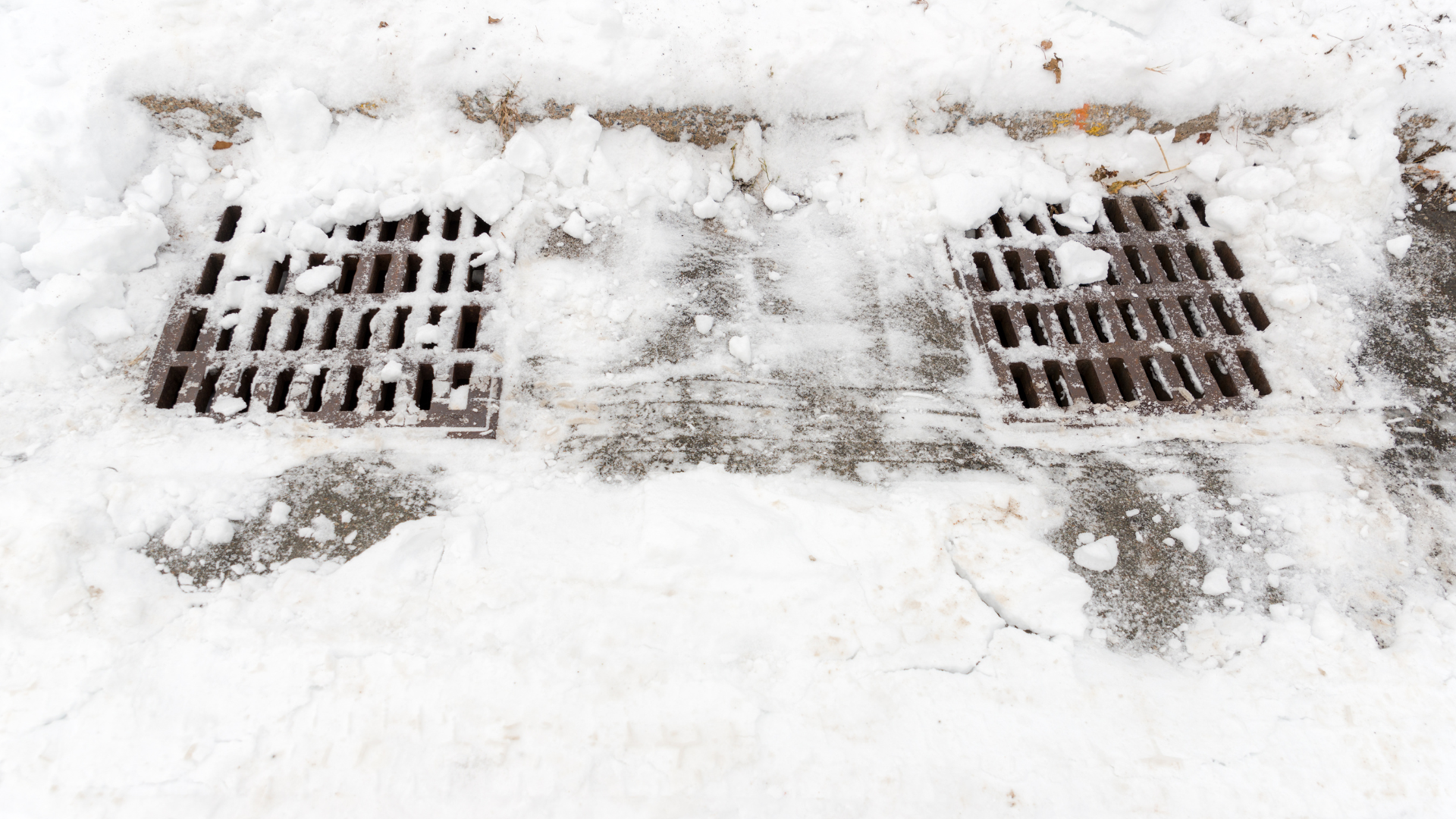
Snow-covered sidewalk drains with two metal grates visible through the snow.
By Mike James • October 20, 2026
See how a wetter El Niño winter may affect Madison yards, what drainage problems to check, and which improvements can help prevent standing water now.
Snow-covered brick pools in a backyard garden with houses and trees in the background
By Mike James • October 13, 2026
Learn why basement seepage appears during winter thaws in Madison, how snowmelt creates water pressure, and when exterior waterproofing may be needed.
White pipe vent protruding from a snow-covered rooftop with ice buildup around the base
By Mike James • October 13, 2026
Learn why frozen ground and snowmelt worsen Madison yard drainage, how to recognize blocked flow, and which drainage solutions address the real cause.
White drain pipe protruding from a concrete wall with black waterproofing at the base beside dirt ground
By Mike James • October 6, 2026
Learn seven signs hydrostatic pressure is building around your Madison foundation, how to identify the water source, and which exterior fixes help most.
Leaves and debris clog a curbside storm drain beside a wet street.
By Mike James • October 6, 2026
Learn five drainage problems fallen leaves can cause around Madison homes, what warning signs mean, and when cleaning or drainage repair may be needed.
House corner with black waterproofing along the foundation and dirt trench beside it.
By Mike James • September 29, 2026
Learn why older footing drains fail during Connecticut's wet fall weather, how to diagnose basement seepage, and when Madison homes need drainage repair.
Brick and stone exterior wall beside a paved walkway
By Mike James • September 29, 2026
Learn why water appears where basement walls meet the floor after heavy rain, what to inspect, and which waterproofing solution fits your Madison home.
Person installing a black downspout extension on a house corner beside red dirt and grass
By Mike James • September 22, 2026
Learn how poor downspout drainage creates foundation moisture in Madison homes, which warning signs to watch, and when underground drainage can help today.