Why this mistake is so damaging: The excavated soil, particularly Connecticut's clay-heavy shoreline soil, has the same low permeability problem that likely contributed to the original drainage issue. Backfilling with this soil directly on top of the gravel and fabric system creates a dense, slow-draining cap that reduces the rate at which surface water can reach the drainage system below it. In clay soil, surface water sits on top of this backfill rather than percolating down into the French drain, which means the system never receives the water it was designed to manage.
The correct approach uses clean gravel as backfill above the fabric-wrapped drainage layer up to a point near the surface, with the final few inches restored with topsoil and seed or sod to blend with the surrounding landscape. This maintains permeability through the full depth of the installation rather than capping a functional drainage system with the same low-permeability soil that was part of the original problem.
A French drain can look fine from the surface and still be losing performance underground. The pipe may be partially restricted, the outlet may be buried in leaves, sediment may be building at the discharge point, or the system may be working properly while a completely different drainage problem is causing water to collect nearby.
At Drainage Pro of CT, we treat french drain maintenance as a performance check, not just a cleaning task. The question is whether the system can still collect water where it is supposed to, carry it through the pipe, and discharge it without backing up.
September is a good time to find out. Once fall rain, leaf debris, and saturated shoreline soils arrive together, a small restriction can become much easier to notice and much harder to ignore.
Why September 2026 Is the Right Time to Test a French Drain
September is not a dry transition month on the Connecticut Shoreline. The National Weather Service's Northeast River Forecast Center lists the 1991-2020 September precipitation normal at about 4.49 inches for Middlesex County and 4.55 inches for New Haven County. NWS Northeast River Forecast Center September precipitation normals
The Climate Prediction Center's current September 2026 guidance shows weak precipitation signals across much of the eastern United States rather than a strong wet or dry signal. NOAA Climate Prediction Center That is a good reason not to wait for a specific heavy-rain forecast before checking the system.
For Clinton homeowners, fall also brings a combination of conditions that matter to drainage:
- Repeated rain events can keep the shallow soil layer wet
- Flat coastal lots may have limited natural runoff
- Seasonal groundwater can rise after extended wet periods
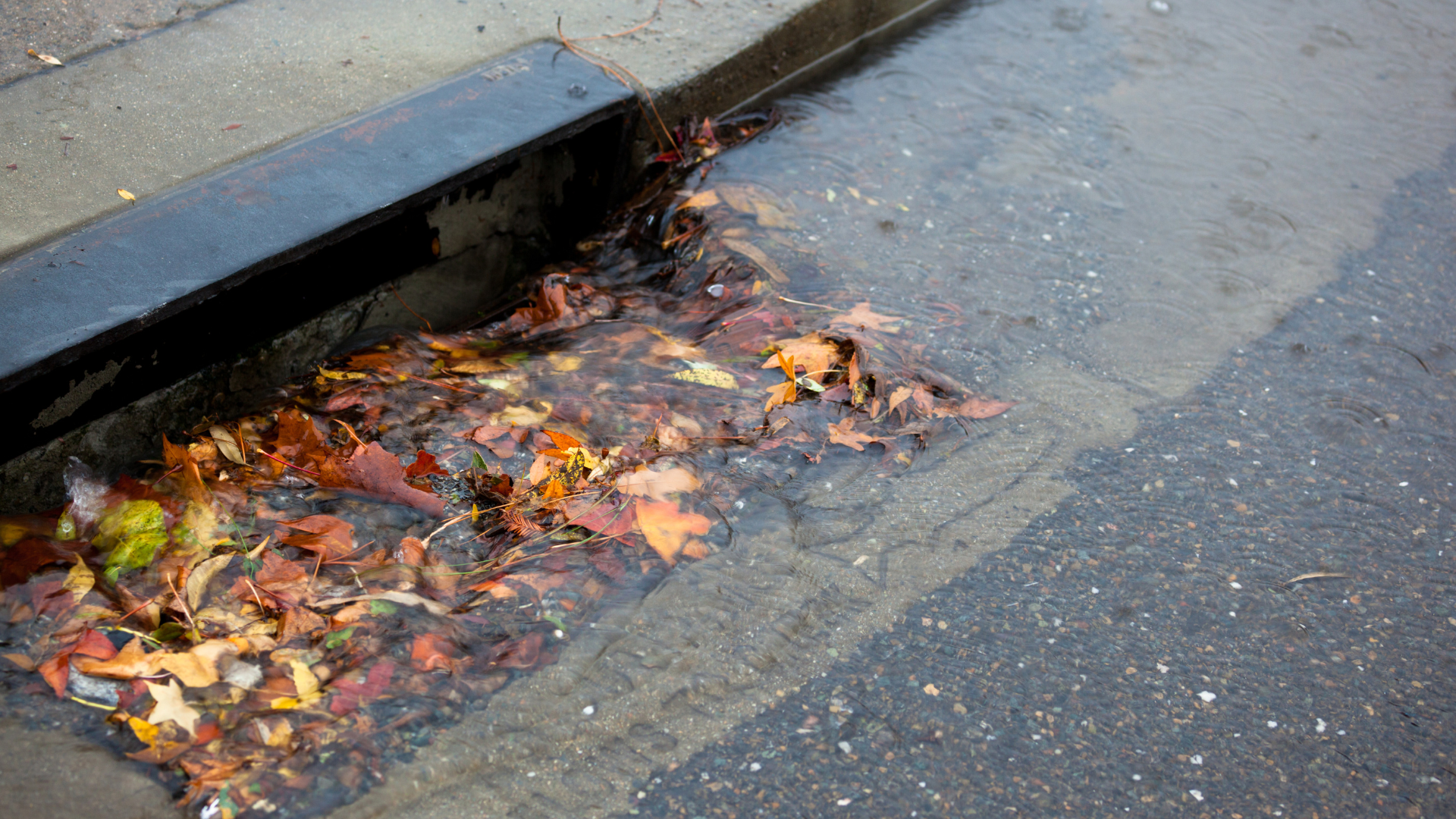
- Leaves can block daylight outlets and surface inlets
- Downspouts may add large volumes of roof water near saturated areas
Drainage Pro of CT is based in Clinton, and we see two different local patterns. Near the shoreline, flat terrain and higher water-table conditions can leave water with nowhere natural to go. Further inland, heavier soils and sloped lots can send subsurface water toward lower areas.
Your French drain should be tested against the conditions it was installed to solve.
Start With the Outlet, Not the Trench
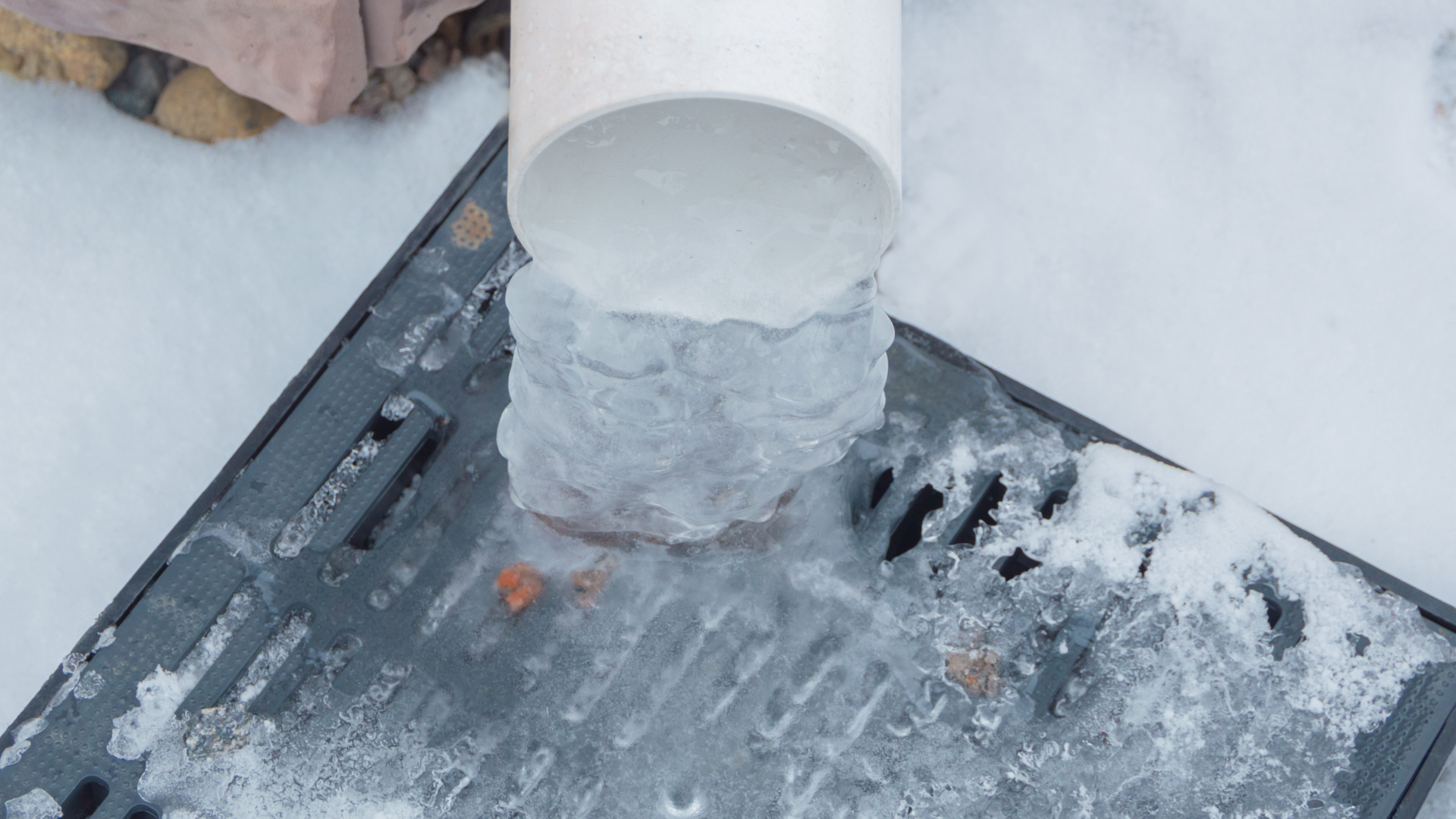
A buried perforated pipe can collect water correctly and still fail to protect the property if the discharge point is blocked. Leaves, mulch, soil, roots, erosion, landscape work, or animal activity can partially cover a daylight outlet over time.
Check the discharge point for:
- Leaves packed around the opening
- Soil or mulch covering the pipe
- Root growth across the outlet
- Crushed or damaged exposed pipe
- Standing water directly at the outlet
- Erosion that has changed the discharge grade
- A screen or grate that is clogged with fine debris
Our French drain installation service plans the discharge point before excavation because collection without a reliable outlet is not a complete drainage system.
Six Signs a French Drain May Be Clogged or Restricted
Use These Symptoms as a Diagnostic Starting Point
| What You Notice | What It Can Mean |
|---|---|
| Water sits longer than it used to | Reduced collection or slower discharge |
| Outlet flow is weak during steady rain | Partial blockage, low flow, or insufficient water reaching the pipe |
| Water appears above the drain path | Pipe or stone may be saturated or restricted |
| One end works but another stays wet | Localized blockage, grade issue, or system layout problem |
| Outlet is dry while the yard is saturated | Water may not be entering the drain or the line may be blocked |
| Wet area has moved to a new location | Water source or grading conditions may have changed |
1. The same wet area takes longer to dry.
If a section of lawn that used to recover within a day or two now stays soft for several days, compare that change with recent rainfall and groundwater conditions.
2. The outlet barely flows during a long rain.
A French drain does not have to discharge continuously, but a system actively collecting subsurface water should show some outlet activity when conditions are wet enough.
3. Water is surfacing above the trench.
Pooling directly over the drain path can mean the surrounding soil is saturated faster than the system can accept water, or it can point toward reduced capacity.
4. The outlet repeatedly clogs with leaves or sediment.
This is often a maintenance problem before it becomes a pipe problem.
5. The system works near one end but not another.
That can indicate a localized issue rather than complete system failure.
6. The problem has changed since the system was installed.
New landscaping, regrading, added downspouts, neighboring runoff, or settlement can change where water enters the property.
A 20-Minute French Drain Check You Can Do Before Fall Rain
Step 1: Walk the Problem Area
Look at the zone the French drain was designed to protect. Compare it with the surrounding yard.
Ask:
- Is the same area still the wettest part of the property?
- Has the wet zone expanded?
- Is water now pooling somewhere else?
- Is the soil soft directly above the drain?
- Is water collecting closer to the foundation?
Step 2: Find the Outlet
Make sure the outlet is visible and open. Remove loose leaves or surface debris only if you can do so safely without damaging the pipe or surrounding grade.
Step 3: Check After Rain
The most useful inspection happens after a steady rain rather than during a brief shower. Look for visible discharge and note whether the protected area drains faster than surrounding saturated soil.
Step 4: Check Nearby Downspouts
A French drain may be functioning correctly while roof runoff is being dumped into the same wet area faster than the property can absorb it. Our downspout drainage service addresses roof water separately so it does not overload the foundation perimeter or yard.
Step 5: Take Photos and Mark Timing
Photograph the wet area at the end of the rain, then again 12 and 24 hours later. That gives us much better information than a single photo of standing water.
When French Drain Cleaning Is Actually Needed
A maintenance visit may focus on the outlet, accessible pipe sections, sediment buildup, or debris that has entered through an opening. In some systems, a camera or flushing equipment may help determine whether the pipe is open.
Cleaning makes more sense when:
- The system previously worked well
- The drainage problem has returned gradually
- The outlet is partially blocked
- Sediment is visible at accessible points
- The pipe is structurally intact
- The surrounding grade has not changed significantly
- Water is still reaching the system but discharge is slow
Cleaning cannot fix every failure. If the pipe has settled and created a low spot, the trench has lost grade, filter fabric has failed, roots have damaged the pipe, or the original discharge point is no longer workable, flushing the line may not restore full performance.
When the Problem Is Not the French Drain
A French drain manages subsurface water. It is not the correct tool for every kind of standing water.
Drainage Pro of CT separates the water source before recommending a fix.
The actual problem may be:
- Surface runoff: Water flows across the lawn during rain and collects at a low point. Grading or a catch basin may be more appropriate.
- Downspout discharge: Roof water is being dumped next to the foundation or into a saturated zone.
- Water arriving from uphill: A curtain drain may be needed to intercept subsurface flow before it reaches the wet area.
- Flat coastal terrain: The French drain may collect correctly but need a better dry-well or discharge solution.
- Changed grading: Settlement or landscaping may now direct water toward the house.
- Foundation drainage: Groundwater may need to be managed at footing level rather than through a shallow yard drain.
Our residential drainage services in Clinton start with tracing where the water is coming from because choosing the wrong drainage system means maintaining the wrong solution.
For properties in Madison, Westbrook, and Guilford, the same rule applies even though soil, terrain, and water-table conditions change from one shoreline town to another.
Should You Flush a French Drain Yourself?
For example, pushing a high-pressure hose into a line without knowing the pipe layout can move debris farther into the system, disturb sediment, or make it difficult to tell where the restriction actually is.
A simple homeowner cleanup is reasonable when:
- The blockage is visible at the outlet
- Only leaves or loose debris are involved
- You do not have to excavate
- The pipe is not damaged
- The outlet remains stable after cleaning
Call for a drainage assessment when:
- The outlet is clear but flow is still poor
- Water is surfacing above the trench
- The drain has never worked correctly
- The system backs up repeatedly
- The pipe may have settled or collapsed
- Roots are involved
- The discharge point no longer drains properly
- You are not sure where the line terminates
We want the maintenance step to solve the actual restriction, not just move it somewhere underground.
What Does French Drain Maintenance or Replacement Cost?
French drain maintenance depends on what is wrong. Clearing an accessible outlet is very different from diagnosing a buried restriction, excavating a damaged section, correcting grade, or replacing a system that has physically failed.
For estimated planning context, residential French drain installation in Clinton commonly falls around $3,000 to $6,000, depending on drain length, depth, soil conditions, discharge method, and restoration work. That gives homeowners a useful benchmark when comparing a maintenance or repair recommendation with full replacement.
Cost Decision Factors

| Cost Factor | Why It Matters |
|---|---|
| Outlet access | Easy daylight outlets are simpler to inspect and clear |
| Drain length | Longer systems take more time to diagnose |
| Depth | Deeper drains require more excavation if repair is needed |
| Soil conditions | Rocky or heavier soil increases excavation effort |
| Type of restriction | Leaves, sediment, roots, and damaged pipe require different work |
| Dry well condition | A saturated or undersized terminus can affect the entire system |
| Pipe damage | Crushed, settled, or disconnected pipe can require excavation |
| Landscape restoration | Digging may require topsoil, seed, sod, or hardscape repair |
| System age | Older materials may justify a broader replacement comparison |
When we install a new French drain in Clinton, we also back the mechanical flow and function of the system with a 5-year workmanship warranty.
At Drainage Pro of CT, french drain maintenance starts with that performance test. We check the outlet, compare wet areas, trace the water source, and determine whether the issue is maintenance, a damaged component, changed site conditions, or a different yard drainage problem altogether.
For Clinton homeowners, September is the right time to find those weaknesses before repeated fall rain and saturated soil make them more disruptive.
If the system is clear and working, we will tell you. If it needs french drain cleaning, repair, or a redesigned discharge point, we can explain exactly why before any work begins.
Related Services & Pages
French Drain Installation
French Drain Installation in Clinton
Residential Drainage Services in Clinton
Yard Drainage Solutions in Clinton
Downspout Drainage
French Drain Installation in Guilford