Surface water management on Connecticut shoreline properties is not a one-size-fits-all problem, and the solution that works well on one property can fail on a neighboring one with different soil conditions, different drainage patterns, or a different source of the water problem. French drains and dry wells are the two most commonly recommended residential drainage solutions across Clinton, Madison, Guilford, Old Saybrook, Branford, East Lyme, and the surrounding communities. Both are effective in the right application. Both can fail in the wrong one.
The decision between a French drain and a dry well is primarily a soil science question before it is a cost question. Connecticut shoreline soils are predominantly clay-heavy, which fundamentally changes the performance equation for absorption-based systems. A dry well that works efficiently in sandy or loamy soil may fail entirely in the clay-heavy conditions common across much of the shoreline, not because it was incorrectly installed, but because the soil surrounding it cannot accept water at the rate the system is designed to deliver it.
This guide explains what each system does, what Connecticut shoreline soil and rainfall conditions mean for each option, which problems each system is best suited to solve, and when the correct answer is a combination of both.
What a French Drain Does and How It Works
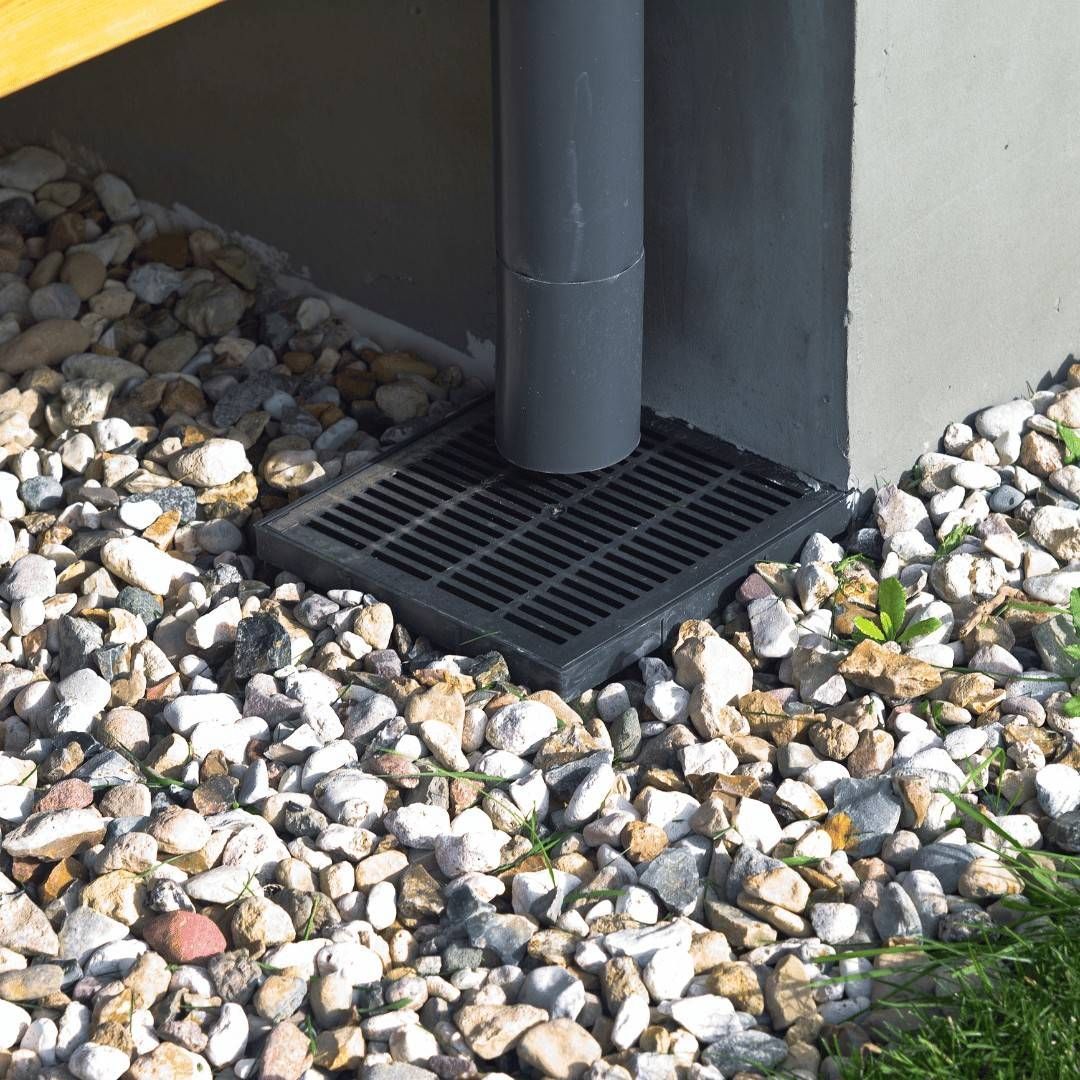
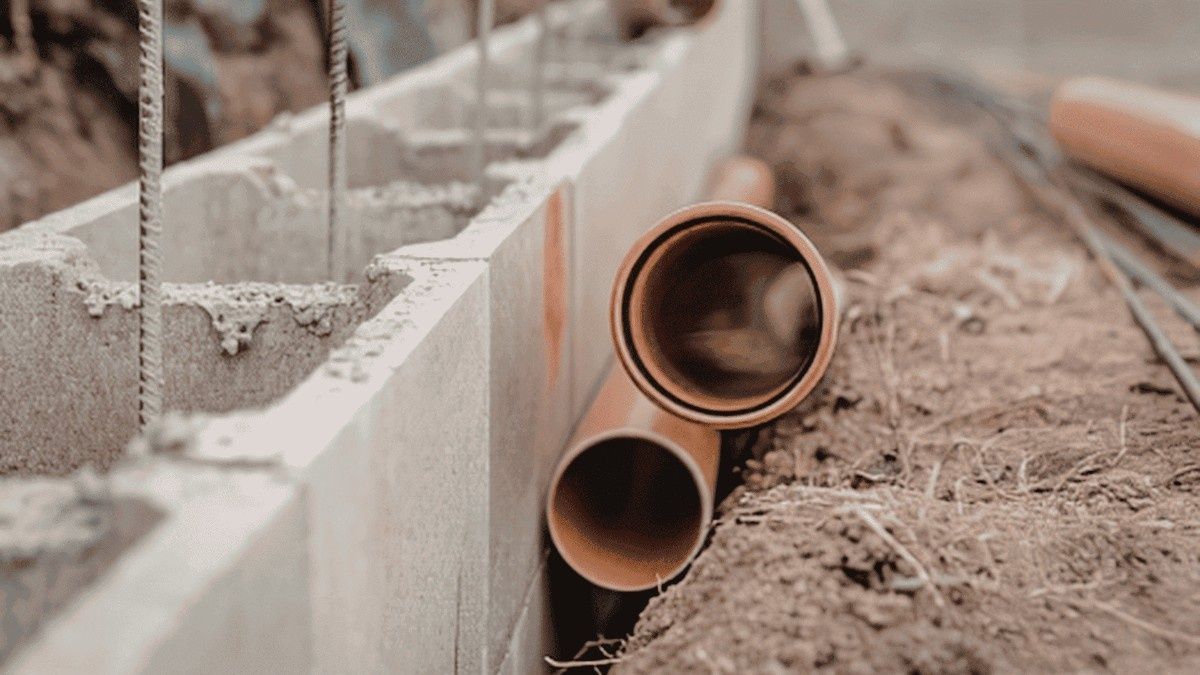
A French drain is a linear subsurface drainage system consisting of a perforated pipe surrounded by gravel and wrapped in filter fabric, installed in a trench designed to intercept groundwater and surface water and redirect it to an appropriate discharge point. The fundamental mechanism is redirection, not absorption. A French drain does not rely on the surrounding soil to absorb the water it collects. It collects water through the perforated pipe, moves it through the system using gravity, and delivers it to a discharge point away from the problem area.
What this means in practice:
- The system's effectiveness does not depend on soil permeability: A French drain installed in clay soil performs similarly to one installed in sandy soil because the water is being moved through the pipe, not absorbed by the surrounding earth. This is the critical advantage of a French drain in Connecticut's clay-heavy shoreline soils.
- A slope is required: French drains are gravity-fed systems. The trench must maintain a consistent grade, typically a minimum of 1 percent or one inch of drop per eight feet of horizontal run, to ensure water flows toward the discharge point. Properties without adequate natural slope require careful design to establish the necessary grade.
- A discharge point must be selected and designed: The water collected by a French drain must go somewhere specific. It can discharge to daylight at a downslope point on the property, connect to a storm drain with appropriate permits, feed into a dry well if soil conditions support it, or direct to a detention area. The discharge point is a design decision that affects both performance and regulatory compliance, particularly on Connecticut shoreline properties near wetlands or coastal resources.
- The system handles continuous and high-volume water flow: Unlike a dry well, which has a fixed storage capacity that can be exceeded during heavy rainfall, a properly sized French drain manages water as it arrives, moving it away from the problem area continuously rather than storing it temporarily.
What French drains are best suited for:
- Properties with clay-heavy soil where absorption-based solutions are ineffective
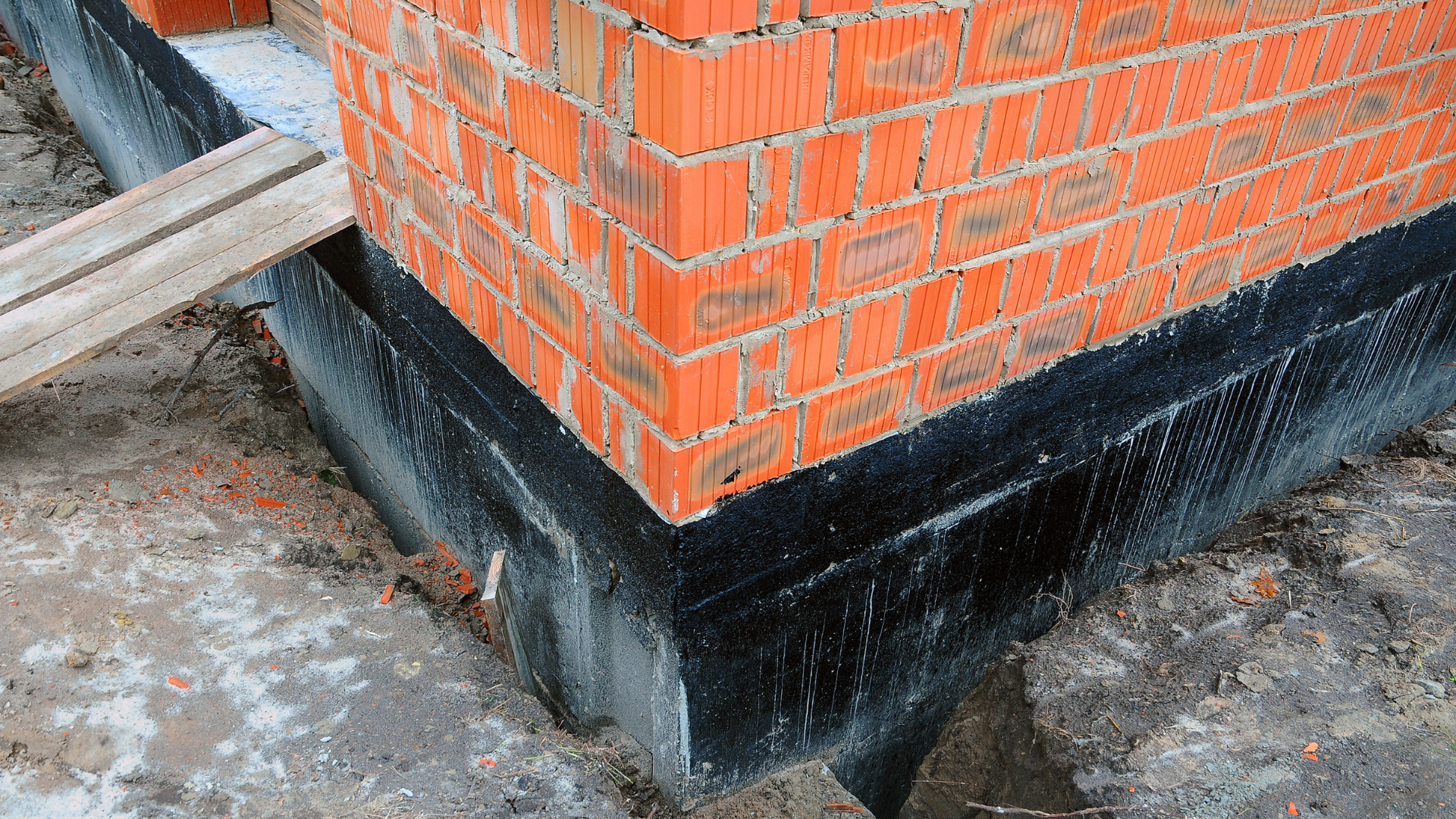
- Foundation perimeter drainage where groundwater or surface runoff is accumulating against the structure
- Low-lying areas where water collects and pools for extended periods after rainfall
- Side yards and areas where water flows across the surface from adjacent properties or higher elevations
- Properties with adequate slope to establish the required drainage grade
What a Dry Well Does and How It Works
A dry well is an underground storage structure, either a gravel-filled pit or a prefabricated perforated chamber, designed to collect water and allow it to infiltrate slowly into the surrounding soil. Unlike a French drain, a dry well does not redirect water to a distant discharge point. It holds water temporarily in a localized underground reservoir and relies on the soil surrounding it to absorb that water over time.
What this means in practice:
- Soil permeability is the determining factor: A dry well works only if the soil surrounding it can accept water at a rate that prevents the chamber from overflowing. In well-draining sandy or loamy soils, dry wells can infiltrate 70 to 90 percent of stormwater runoff efficiently. In clay-heavy soils, the same system may reach capacity during a moderate rain event and back up because the surrounding clay cannot absorb water fast enough to keep pace with what is entering the chamber.
- Dry wells handle localized, point-source water problems: They are most effective when the drainage problem is a specific, concentrated source such as a single downspout discharging near the foundation, a sump pump discharge point, or a low spot in the yard that collects runoff from a small defined area. They are not designed to manage linear water flow or large volumes of groundwater movement.
- Dry wells have a fixed capacity that can be exceeded: During Connecticut's 48 inches of annual rainfall, including nor'easters and summer thunderstorms that deliver significant volumes in short windows, a dry well serving a roof downspout or foundation drain can reach capacity quickly. In clay-heavy soil where the surrounding earth absorbs water slowly, an overwhelmed dry well produces the same flooding condition it was designed to prevent.
- They require periodic inspection and maintenance: Sediment and debris that enter the dry well through the collection pipe settle in the chamber over time, progressively reducing its effective capacity. According to drainage industry guidance, dry wells require periodic inspection and flushing to maintain efficiency.
What dry wells are best suited for:
- Properties with sandy or loamy soils where soil permeability is confirmed through a percolation test
- Point-source drainage problems such as a single downspout or sump pump discharge
- Flat areas where a French drain cannot achieve the necessary drainage grade
- Situations where no appropriate discharge point exists for a French drain
- As the receiving end of a French drain system in soils with sufficient permeability
The Connecticut Shoreline Soil Condition That Changes the Calculation
The most important site-specific factor for any Connecticut shoreline drainage decision is the soil. Clay-heavy soils are common throughout the region, from the inland residential neighborhoods of Clinton and Madison to the coastal properties along Long Island Sound. Clay soil has very low permeability. It absorbs water slowly, retains saturation for significantly longer than sandy or loamy soil, and creates the sustained wetness conditions that cause most of the drainage problems Connecticut shoreline homeowners call Drainage Pro about.
According to landscape drainage experts, French drains are usually best for clay soils because the drainage is poor and a dry well can struggle to disperse water into clay. This is not a preference. It is a function of how each system works. A French drain moves water regardless of whether the surrounding soil can absorb it. A dry well depends on the surrounding soil absorbing it.
For Connecticut shoreline homeowners, this means:
- A dry well installed in clay-heavy soil without a percolation test confirming adequate soil permeability is a high-risk installation: It may perform adequately during light rainfall and fail during the sustained heavy rainfall events that Connecticut experiences regularly. The homeowner who installs a dry well to address a drainage problem in clay soil and then experiences flooding during the first significant storm has not just failed to solve the problem. They have paid for a solution that does not match the soil conditions.
- A French drain in clay-heavy Connecticut shoreline soil typically outperforms a dry well because it does not ask the soil to do something it cannot do. It redirects water to a discharge point where the soil conditions no longer apply.
- A percolation test is the diagnostic step that determines which system is appropriate: A percolation test measures how quickly water is absorbed by the soil at a specific depth. This is the information a drainage contractor needs before recommending a dry well on any Connecticut shoreline property. A contractor who recommends a dry well without conducting or reviewing percolation test results has not established whether the soil will support it.
The High Water Table Factor: A Coastal Consideration
Connecticut shoreline properties, particularly those in low-lying areas near tidal wetlands, coastal marshes, and the mouths of rivers and streams, face a drainage challenge that neither a French drain nor a dry well can fully address without specific design attention: a seasonally or permanently high water table.
A high water table affects both systems differently:
Impact on dry wells: A dry well installed in soil with a high water table has limited or no vertical absorption depth between the bottom of the chamber and the saturated zone. Water entering the well during periods when the water table is near the surface has nowhere to go. The well fills rapidly and overflows. For Connecticut shoreline properties where the water table rises significantly during wet seasons, a dry well that performs adequately in late summer may fail entirely during spring snowmelt or sustained winter rain periods.
Impact on French drains: A French drain in high water table conditions requires careful design of the discharge point to ensure that it discharges above the water table elevation, not into it. A French drain that discharges into a discharge point that is itself saturated cannot move water. The discharge point must be selected to function throughout the seasonal range of water table elevations on the specific property.
For coastal properties in East Lyme, Old Lyme, and Westbrook where tidal influence affects groundwater levels, the seasonal water table range is a design variable that must be accounted for in any drainage system installation. This is one of the strongest arguments for working with a drainage contractor who has specific experience on Connecticut shoreline properties rather than one applying generic drainage design to coastal conditions they have not regularly encountered.
When the Correct Answer Is Both
French drains and dry wells are not mutually exclusive. For some Connecticut shoreline properties, the most effective drainage solution combines both systems, using each where it performs best.
The combined system approach works as follows: A French drain intercepts and redirects water from the problem area, moving it through the pipe system to a discharge point. If the discharge point is a location on the property with soil conditions that support infiltration, a dry well at the discharge point provides a localized absorption zone that handles the French drain's output without requiring a daylight discharge or a connection to a storm drain. The French drain handles the linear water movement and does the work that the clay soil cannot do. The dry well provides the terminal absorption point in a location where the soil permeability has been confirmed to support it.
This combined approach is particularly relevant for:
- Properties where no daylight discharge point exists at an appropriate elevation and distance from the foundation
- Properties where storm drain connection is not permitted or is not feasible
- Properties with variable soil conditions where clay-heavy zones near the foundation transition to better-draining soils farther from the structure
- Properties where both linear groundwater flow and localized point-source problems exist simultaneously
The decision to use a combined system, and the specific configuration that serves a particular Connecticut shoreline property, requires the same site assessment that any drainage installation requires: soil evaluation, water source identification, discharge option assessment, and slope analysis before any scope is proposed.
The Percolation Test: Why It Is Not Optional for Connecticut Shoreline Dry Well Decisions
A percolation test measures the rate at which water is absorbed by the soil at the depth and location where a dry well would be installed. It is the diagnostic step that transforms a drainage recommendation from a general preference into a site-specific one. For Connecticut shoreline properties where clay soil may be present throughout the profile or only in certain layers, a percolation test determines whether the soil at the proposed dry well location can actually support the system.
According to drainage industry guidance, a percolation test should always be performed to ensure the soil can absorb water efficiently before a dry well is installed. Skipping this step means installing a system whose performance depends on an assumption about soil conditions rather than a measurement of them.
The percolation test for a dry well location involves:
- Digging a test hole to the depth of the proposed dry well installation
- Filling the hole with water and allowing it to drain completely to pre-saturate the soil
- Refilling the hole to a measured depth and timing how long it takes for the water level to drop a specific distance
- Comparing the measured absorption rate against the volume the proposed dry well would need to handle
If the soil absorbs water at a rate that can keep pace with the anticipated input volume, a dry well is a viable option at that location. If it does not, a French drain with a different discharge strategy is the appropriate solution.
Drainage Pro of CT conducts site assessments that include soil evaluation and percolation observation before recommending any drainage system for Connecticut shoreline properties. The assessment result, not a product preference or cost comparison, determines what is recommended.
Cost Comparison: What Each System Typically Costs on Connecticut Shoreline Properties
Dry well installation: Typically runs $1,500 to $4,000 for a standard residential installation, according to multiple industry pricing sources, depending on the size of the chamber, the depth of installation, and the complexity of the collection pipe connection.
French drain installation: Exterior French drains for a full property perimeter typically run $8,000 to $15,000, according to This Old House pricing data, with smaller targeted installations running less. Linear footage, depth, discharge point complexity, and site conditions all affect the final cost.
The cost comparison that matters most on Connecticut shoreline properties: A dry well that fails in clay soil and requires a French drain to replace or supplement it costs the homeowner both the original dry well installation and the subsequent French drain installation. According to drainage professionals with experience in clay-heavy soil regions, choosing the wrong system based on lower upfront cost and then needing to install the correct system afterward means paying for both. The percolation test and site assessment that determine the right system upfront cost far less than the remediation of a drainage solution that does not match the site conditions.
Drainage Pro of CT: Site-Specific Drainage Solutions for the Connecticut Shoreline
Drainage Pro of CT serves Clinton, Madison, Guilford, Old Saybrook, Branford, East Lyme, New Haven, and the surrounding Connecticut shoreline communities with French drain installation, dry well installation, combined system design, yard drainage solutions, foundation waterproofing, and grading services.
Every drainage assessment begins with a site visit that evaluates the water source, the soil conditions, the slope, the discharge options, and the regulatory constraints that apply to the specific property. The recommendation that follows is based on what those conditions support, not on which system is easier to install or which generates a larger job.
For Connecticut shoreline homeowners trying to determine whether a French drain or a dry well is the right answer for their property, the free on-site assessment Drainage Pro of CT provides is the starting point that replaces guesswork with measurement.